{ Countertop Water Dispenser }

  • Are Countertop Water Dispensers Effective for Lead Removal?

    Why Is Lead in Drinking Water Becoming a Growing Concern?


    Many people assume that tap water is safe simply because it looks clear and tastes normal. However, water quality concerns are not always visible. Certain contaminants, including lead, cannot be detected by appearance, taste, or smell, which is why many households are paying more attention to additional water filtration solutions.


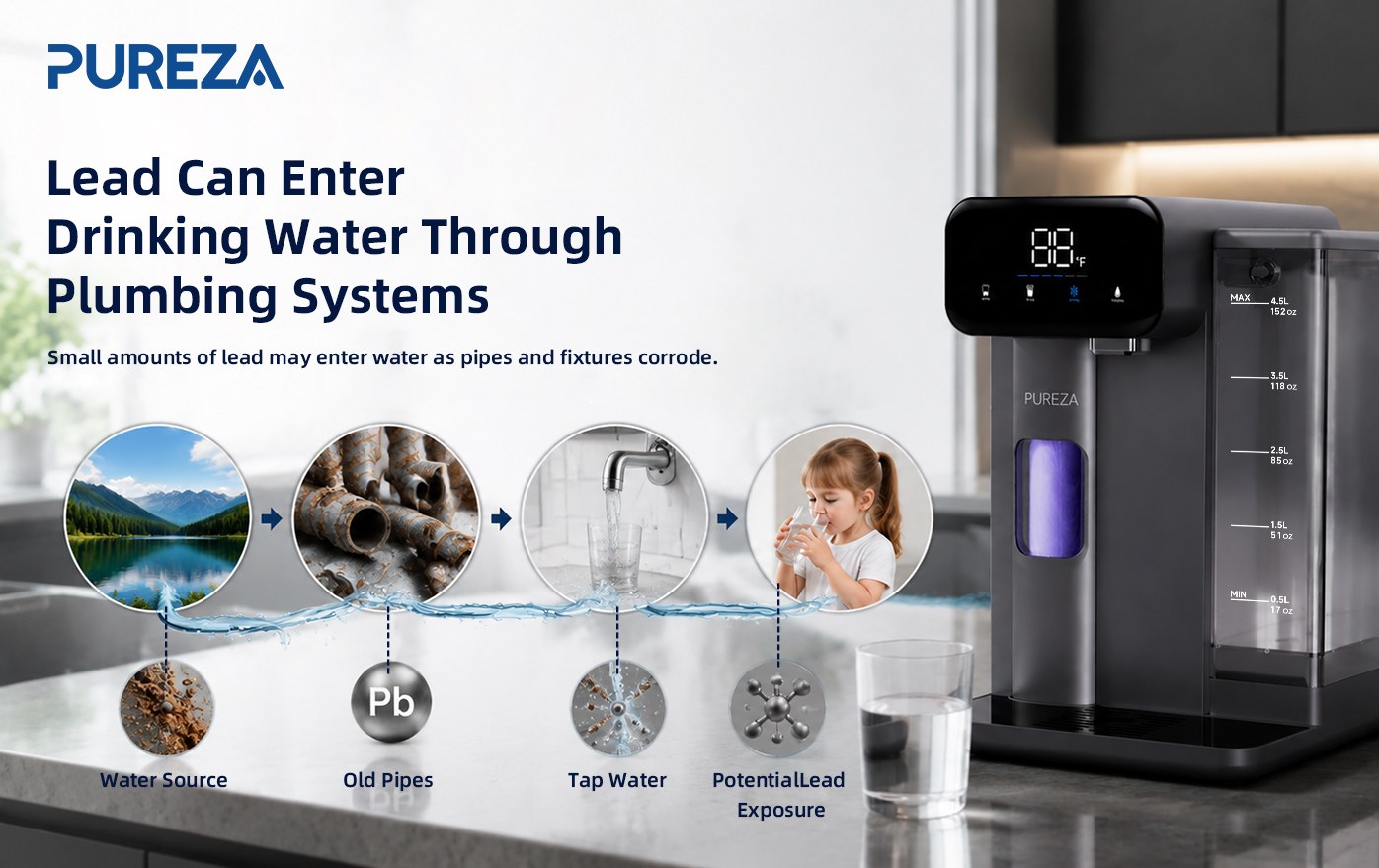
    Lead in drinking water is often associated with aging plumbing systems, metal fittings, or components that water contacts during transportation. While municipal water treatment plays an important role in providing safe drinking water, the quality of water can still be affected after leaving the treatment facility.


    This leads to an important question: Are countertop water purifiers effective for lead removal?


    The answer depends on the filtration technology, filter design, and performance testing behind the product. A well-designed countertop water dispenser can help reduce certain contaminants while providing a convenient way to enjoy cleaner drinking water at home.


    PU-T02 Countertop Cold Water Dispenser


    Why Can Lead Be Found in Drinking Water?


    Lead contamination in drinking water is usually not caused by the appearance or taste of the water itself. Instead, it is often related to the materials that water comes into contact with before reaching the consumer. In older buildings, aging pipes and plumbing components may contribute to metal contamination over time. Certain fittings, connectors, or distribution materials may also affect water quality depending on their composition and condition.


    Because lead cannot be identified through normal senses, consumers often need other methods to improve confidence in their drinking water quality. Water testing can help identify potential concerns, while suitable filtration systems provide an additional solution for households that want to reduce unwanted substances. For this reason, choosing a countertop water dispenser is not only about improving taste. It is also about selecting a filtration system designed to address specific water quality concerns.


    Can Countertop Water Dispensers Really Reduce Lead?


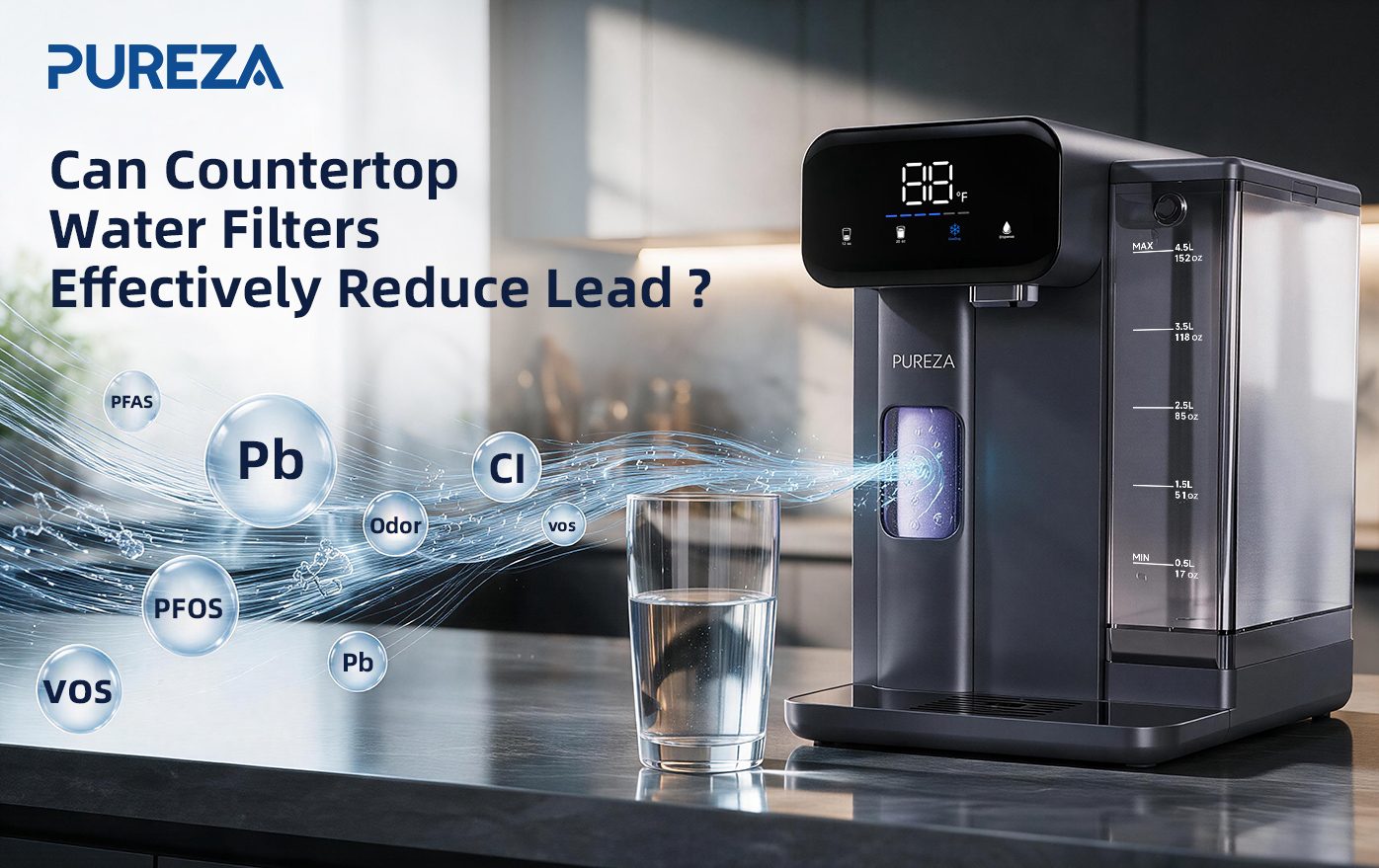
    Yes, certain countertop water dispensers can help reduce lead, but not all filters work in the same way. The effectiveness of a filtration system depends largely on the materials used, filtration structure, and whether the product has been tested for specific contaminant reduction. Simple dispensers may mainly focus on improving taste, reducing chlorine, or removing larger particles. However, more comprehensive filtration systems combine multiple technologies to address a wider range of water quality concerns.


    A practical countertop water dispenser should clearly explain what contaminants it is designed to reduce and how the filtration process works. This allows consumers to choose a solution based on their actual needs rather than relying only on general claims.


    For modern households, filtration technology is only one part of the decision. Convenience, maintenance requirements, and daily usability are equally important when choosing a countertop drinking water solution.


    How Does Filtration Technology Help Reduce Lead and Other Contaminants?


    Different filtration technologies work in different ways, and combining multiple filtration methods can provide a more complete solution. Activated carbon is one of the most common filtration materials used in household water systems. Through adsorption, activated carbon helps reduce chlorine, odors, and certain organic compounds, improving both water taste and drinking experience.


    PU-T02 countertop cold water purifiers also use membrane filtration technology to help capture specific contaminants. For example, positively charged membrane filtration uses electrostatic attraction to help reduce substances such as lead, PFAS, BPA, pharmaceutical residues, chlorine, and small particles including microplastics.


    The PUREZA PU-T02 countertop water dispenser uses positively charged membrane filtration technology designed to help reduce common drinking water concerns while providing filtered cold water for everyday use. The system also helps reduce microorganisms, including bacteria and viruses, through its filtration design.


    The actual performance of any filtration system depends on product design, water conditions, and proper filter maintenance. Therefore, consumers should always consider tested performance and suitable applications when selecting a water filter.


    Why Are Filtered Countertop Cold Water Dispensers Becoming More Popular?


    Today’s consumers are looking for more than just filtered water. They want a drinking water solution that is convenient, space-saving, and suitable for everyday lifestyles.


    Traditional filtration methods may require frequent refilling or additional installation. Countertop cold water dispensers combine filtration and cooling in one compact appliance, making them easier to integrate into kitchens, offices, and living spaces.


    Cooling performance is an important part of the overall drinking experience. The PUREZA PU-T02 is designed for users who prefer chilled filtered water, with a dual electronic ice tank cooling system that can cool water down to 7°C. Compared with many similar countertop products that typically cool water to around 10°C, a lower temperature provides a more refreshing option for daily hydration.


    Capacity and dispensing speed also influence user experience. A 4.5L feed water tank reduces frequent refilling, while the 1.2L cooling tank can provide enough chilled water for multiple servings. With a 1L/min flow rate, users can access filtered water faster without long waiting times.


    What Should You Consider When Choosing a Countertop Water Dispenser?


    When choosing a countertop water purifier, filtration performance is important, but it is not the only factor. A good product should also provide convenience and long-term reliability.


    Filter lifespan is one factor that affects maintenance. A filter with a longer service life can reduce replacement frequency and provide more consistent performance. The Z035N filter cartridge is designed for up to 1135L of water usage, with a recommended replacement cycle of approximately 6 months.


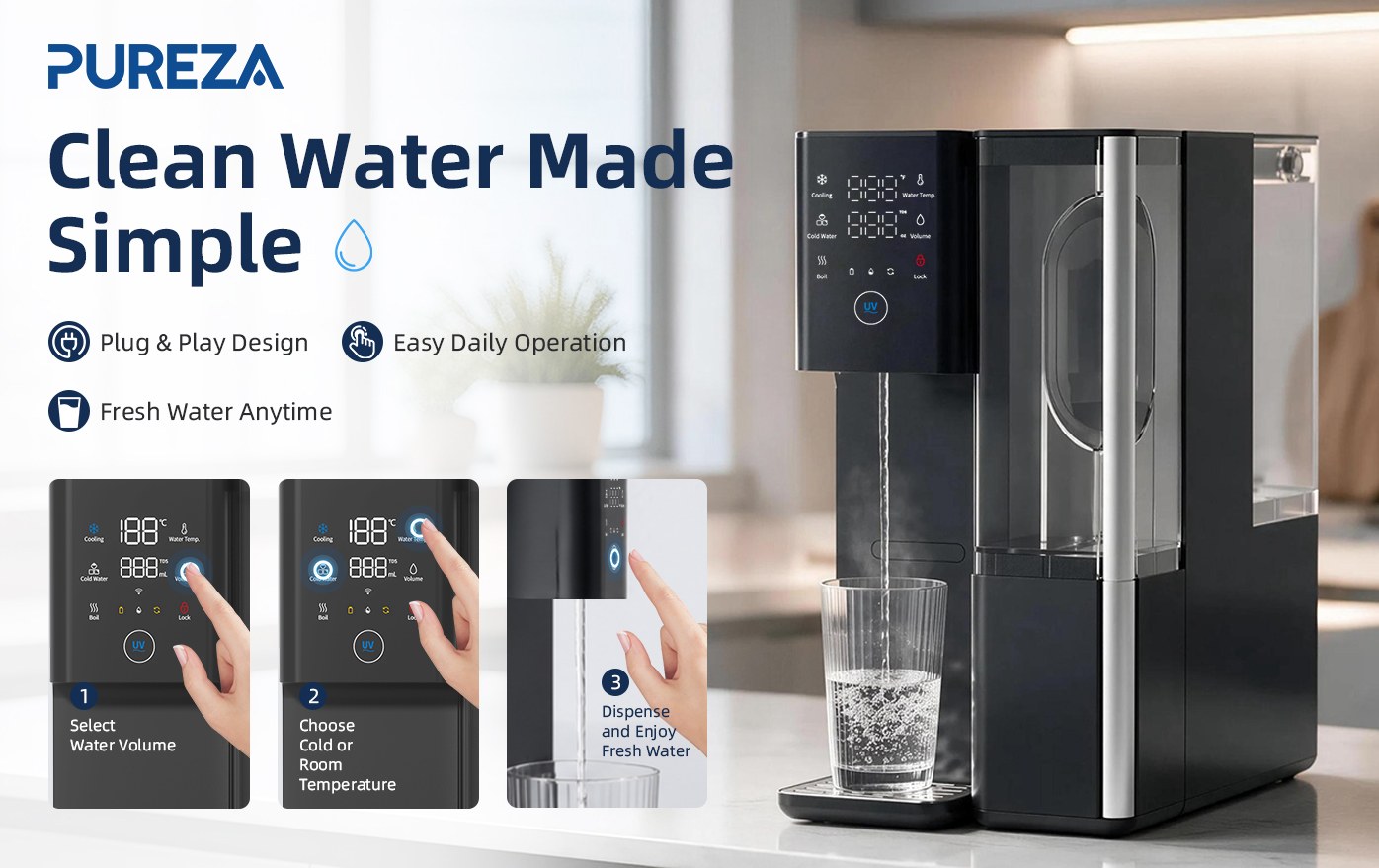
    Ease of use is another important consideration. A plug-and-use design eliminates complicated installation, while features such as preset 12oz and 20oz dispensing options make daily hydration easier. The 235mm cup height also allows compatibility with different cup sizes.


    For households looking for filtered cold water without plumbing modifications, these practical features can make countertop water dispensers a more convenient choice.


    Making a Smarter Choice for Cleaner Drinking Water


    Countertop water filters can be an effective option for improving everyday drinking water quality when they use suitable filtration technology and are designed for specific water concerns.


    Lead reduction is not only about choosing a filter, but also about understanding how the filtration system works and selecting a product with reliable performance.


    By combining filtration, cooling, and convenient operation, countertop cold water dispensers provide a practical solution for families who want cleaner and colder drinking water without complicated installation.
  • How Do Countertop Water Purifiers Work to Remove Contaminants?

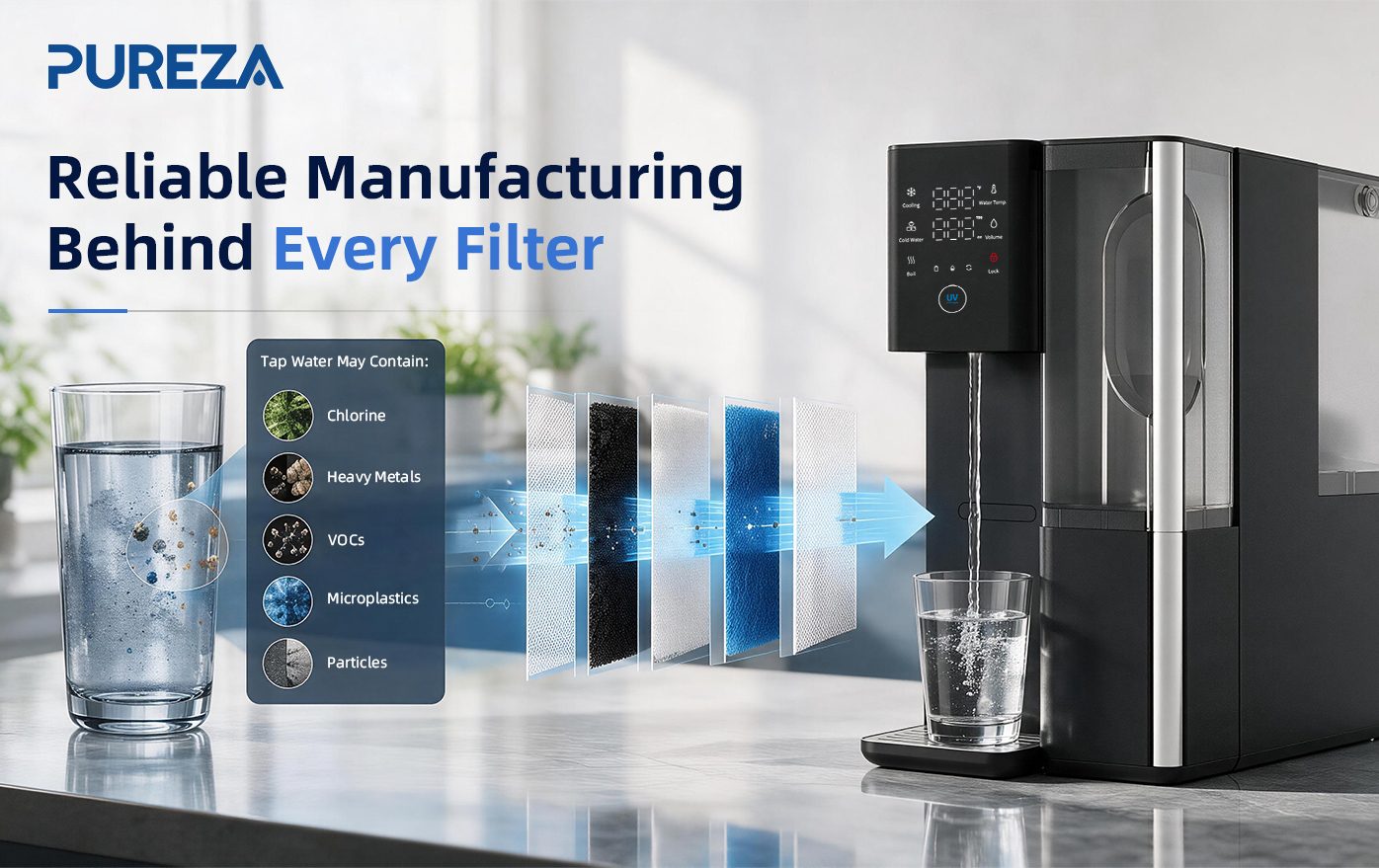
    Many people assume that tap water is safe simply because it looks clear and has no unusual smell. However, water quality is not only determined by appearance. During transportation through pipelines or storage systems, water may contain various unwanted substances, including chlorine, heavy metals, dissolved solids, chemical residues, and other emerging contaminants.


    For households that want cleaner drinking water without complicated plumbing installation, countertop water dispensers have become an increasingly popular solution. But how exactly do these compact systems remove contaminants from tap water?


    The answer lies in a combination of multiple filtration technologies, including sediment filtration, activated carbon adsorption, reverse osmosis (RO) purification, and additional treatment technologies designed to improve water safety and taste.


    PU-T01 Countertop RO Water Dispenser


    1. What Contaminants Can Be Found in Tap Water?


    Although municipal water treatment removes many harmful substances, some contaminants may still enter water during distribution or remain at trace levels.


    Common concerns include:


    Aging plumbing systems may introduce metals such as lead into drinking water.


    Chlorine is commonly used for water disinfection, but excessive chlorine can affect taste and odor.


    Dissolved solids and chemical residues


    Minerals, salts, and certain chemical compounds can influence water quality.


    Microorganisms and particles


    Small particles, sediments, and microorganisms may affect drinking water cleanliness.


    Because many contaminants cannot be seen or tasted, an effective filtration system needs multiple treatment stages rather than relying on a single filter material.


    2. How Does PU-T01 Countertop RO Water Purifier Remove Contaminants?


    A high-performance countertop water purifier typically uses a multi-stage filtration process. Each stage has a specific purpose, allowing different types of contaminants to be reduced step by step.


    Stage 1: PP Filtration Removes Larger Particles


    The first filtration stage usually uses a PP sediment filter to capture larger impurities such as rust, sand, and suspended particles. This stage protects the following filtration components and helps maintain stable system performance.


    Stage 2: Activated Carbon Improves Taste and Reduces Chemicals


    Activated carbon works through adsorption, capturing chlorine, odors, and certain organic compounds. By reducing unpleasant tastes and smells, activated carbon plays an important role in improving the overall drinking experience.


    Stage 3: Reverse Osmosis Reduces Dissolved Contaminants


    The RO membrane is the core purification technology in many advanced countertop water purifiers. Unlike ordinary filters that mainly remove larger particles, reverse osmosis uses pressure to separate water molecules from many dissolved substances.


    A quality RO system can significantly reduce:


    - Dissolved solids 


    - Heavy metals


    - Certain chemical contaminants


    - Other unwanted substances


    Pureza countertop RO purifier combines these stages into one integrated filtration system. For example, a five-stage composite filter can combine PP filtration, carbon filtration, RO membrane purification, and post-filtration carbon treatment to provide comprehensive water purification.


    3. Why Are Multi-Stage Countertop RO Water Dispensers More Effective?


    Different contaminants require different removal methods. A single filtration technology may not be enough to address all water quality concerns.


    A multi-stage RO purification system provides a more complete solution by combining:


    · Particle filtration


    · Carbon adsorption


    · RO membrane purification


    · Final polishing filtration


    For everyday household use, convenience is also important. A practical countertop purifier should not only provide purified water but also store enough water for daily needs.


    A larger feed water tank reduces the need for frequent refilling, while a separate pure water container allows users to access purified water easily. For example, systems equipped with a 5L feed water tank and a 1.2L pure water pitcher can support daily drinking needs while maintaining a compact countertop design.


    4. What Features Should You Look for in a Modern Countertop Water Purifier?


    Beyond filtration performance, user experience is another important factor.


    Our countertop hot & cold water purifier should provide:


    Flexible water temperature and volume options


    Different drinking habits require different water settings. Adjustable temperature levels allow users to prepare drinking water, coffee, tea, and other beverages more conveniently. Multiple volume selections also reduce unnecessary water waste.


    Additional water safety protection


    Some advanced countertop purifiers include UV sterilization technology. Flow-through UV treatment provides an additional protection layer by treating water as it passes through the system.


    Smart monitoring and easy maintenance


    Filter replacement is essential for maintaining purification performance. A clear filter life indicator helps users understand when maintenance is needed. Long-lasting filter cartridges can also reduce replacement frequency and improve overall convenience.


    5. Is a Countertop RO Water Purifier Worth Choosing?


    For households looking for cleaner drinking water without complicated installation, countertop RO purifiers offer a practical balance between purification performance and convenience.


    By combining multi-stage filtration, RO membrane technology, smart operation, and compact design, Pureza countertop RO water dispenser provide an effective way to improve everyday drinking water quality. When choosing a countertop purifier, consumers should consider not only filtration capability but also certifications, filter lifespan, maintenance convenience, and overall user experience.


    A reliable system with tested filtration performance and safety certifications can provide long-term confidence for daily drinking water needs.

  • NSF/ANSI 58 Certification The Gold Standard for Countertop Water Dispenser

    From your first refreshing morning sip to cooking meals with enhanced natural flavors, and especially when preparing your baby's formula - every drop of water impacts your family's health. Can your countertop water dispenser truly protect against heavy metals, viruses, and chemicals? NSF/ANSI 58 Certification is the answer.


    What is NSF/ANSI 58 Certification?

    Set by NSF International, it's the highest global standard for RO/NF water systems:
    · Safe materials: No harmful chemicals (BPA, lead) leach into water.
    · Proven performance: Removes lead, arsenic, cadmium, and more.
    · Leak-proof: Rigorous pressure testing ensures durability.
    · Truth in Packaging and Instruction: Certified specs equal actual performance.


    Why Choose NSF 58 Certified?


    · Safe for all: Even infants and sensitive groups can drink directly.
    · Consistent protection: Effective for the filter's entire service life.
    · Trusted quality: Avoid false claims with this third-party certification.


    PUREZA Goes Beyond Certification


    At PUREZA, we believe certification is not the destination, but the starting of responsibility. Our core products not only fully comply with the rigorous NSF/ANSI 58 standards but go above and beyond to deliver exceptional performance:

    · 95%+ contaminant removal (heavy metals, viruses, etc.)
    · BPA-free materials safe for babies and elders
    · Long-lasting value with certified performance


    Always check for the NSF 58 Mark

    Your family's safety isn't a gamble. For your family's health, always choose NSF 58 certified products.

    PUREZA: Certified Protection for Every Drop of Water.