Optimizing Heat Pump Efficiency OEM Guide to Smart Thermostat Integration
As heat pump adoption accelerates across North America, the thermostat has become one of the most critical components for system performance. For Tier-1 HVAC brands and OEM partners, choosing the right thermostat is no longer just about basic on/off control — it’s about intelligent integration that maximizes efficiency, minimizes field failures, and delivers real energy savings.
Why Standard Thermostats Fall Short for Modern Heat Pumps
Traditional thermostats often struggle with the unique demands of heat pumps:
- Short-cycling: Frequent starts and stops reduce compressor lifespan and efficiency.
- Inefficient Auxiliary Heat Usage: Electric backup heat activates unnecessarily, driving up operating costs.
- Poor Multi-Stage & Inverter Management: Failure to match the heat pump’s variable capacity leads to comfort issues and higher energy consumption.
- Communication Gaps: Lack of proper protocol support prevents full optimization of inverter-driven systems.
These issues result in increased callbacks, warranty claims, and damage to brand reputation. If you are looking to address these challenges, explore our Heat Pump Thermostat Solutions to see how precision engineering makes a difference.
E-TOP’s Engineering Approach to Heat Pump Thermostat Integration
At E-TOP Controls, we engineer thermostats specifically for heat pump OEM/ODM applications. With over 20 years of experience serving European and North American markets, we help brands deliver reliable, high-efficiency solutions. Learn more about our manufacturing philosophy on our ODM & OEM Solutions page.
1. Adaptive Control Algorithms
Our thermostats use intelligent PID + adaptive logic to analyze temperature trends and system behavior in real time. This prevents “running after setpoint” and intelligently stages heating/cooling to match the heat pump’s output.
2. Multi-Stage & Auxiliary Heat Management
Configurable outputs for 2-stage or variable capacity systems.
Smart auxiliary heat lockout based on outdoor temperature or runtime.
Dual-fuel/hybrid system support (heat pump + gas furnace).
3. Protocol Flexibility for OEM Integration
Relay Logic (standard models)
Modbus, BACnet MS/TP (for commercial and BMS integration)
OpenTherm compatibility where applicable
Custom firmware development for proprietary heat pump protocols
4. Regulatory & Market Readiness
Our North American heat pump thermostats are designed to support UL/ETL requirements and help OEMs meet evolving energy efficiency standards (SEER, HSPF, ENERGY STAR).
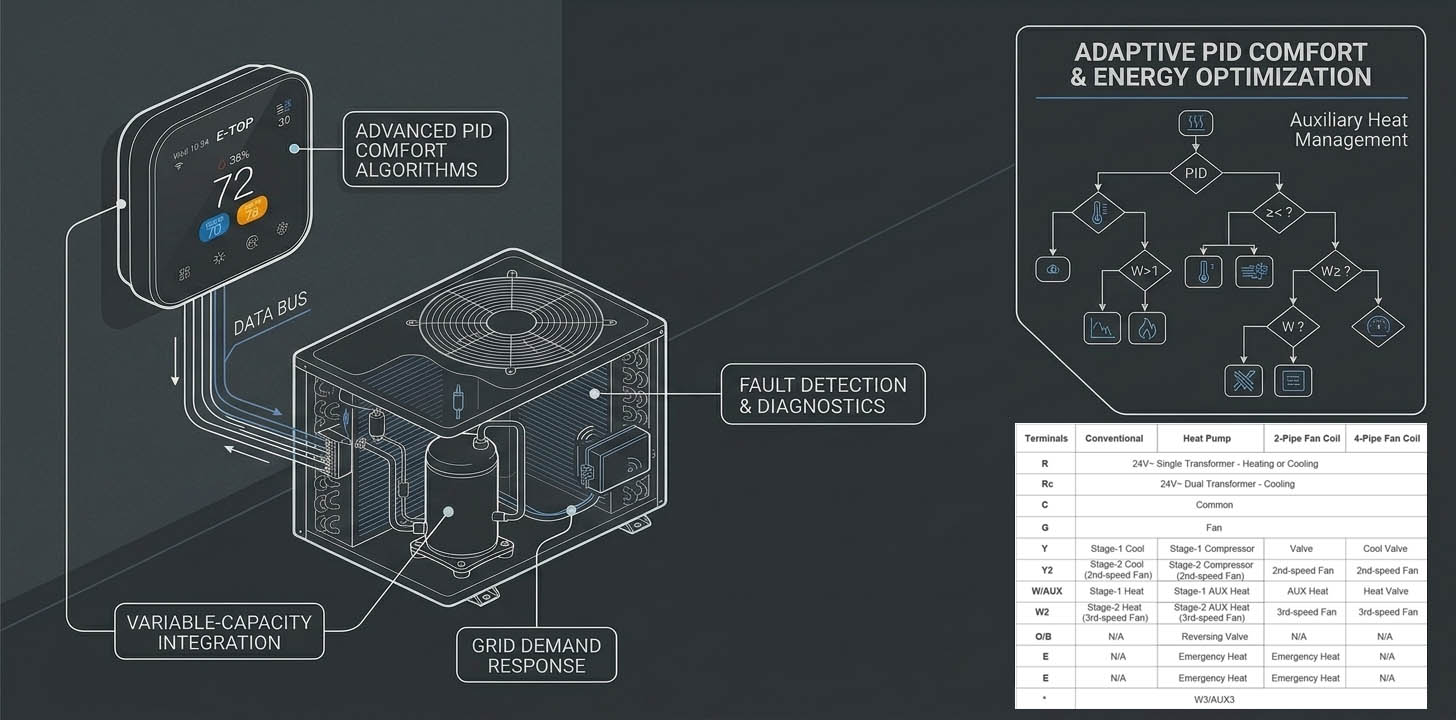
By leveraging this advanced integration architecture, E-TOP provides tangible business advantages that enhance your brand’s market position
Key Benefits for OEM Partners
| Feature | Benefit for Your Brand | End-User Impact |
| Adaptive PID Control | Reduced short-cycling | Lower energy bills |
| Smart Auxiliary Heat Logic | Optimized backup heat usage | Higher comfort & efficiency |
| Multi-Stage Support | Full heat pump capacity utilization | Consistent temperature control |
| Robust Communication | Fewer integration failures | Reduced service calls |
| Custom OEM Branding | Seamless private label integration | Stronger brand identity |
Strategic OEM/ODM Cooperation
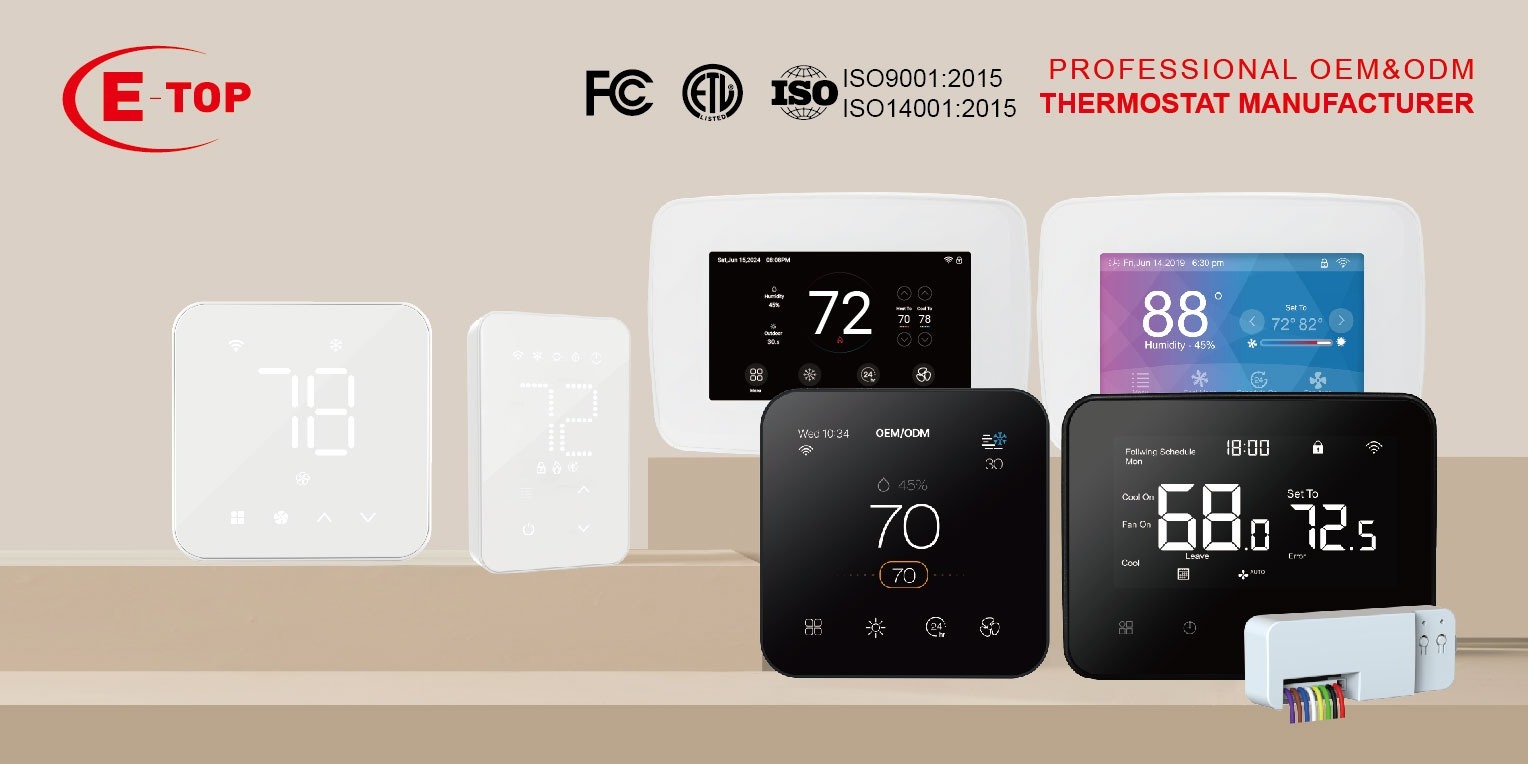
Whether you need a standard programmable heat pump thermostat or a fully custom solution with your brand’s firmware requirements, E-TOP provides:
- Rapid prototyping and engineering samples
- Full compliance documentation
- Direct access to HVAC protocol specialists
- Flexible production scaling for large B2B clients
Ready to enhance your heat pump lineup?

---------------------------------------------------------------------------------------------------------------------------------------------------------------------
FAQ
Q1: Do your thermostats support inverter-driven heat pumps?
A: Yes. We offer models with advanced staging logic optimized for variable capacity systems.
Q2: Can you develop custom firmware for our specific heat pump brand?
A: Absolutely. Many of our OEM partners work with us on proprietary communication protocols.
Q3: What is the typical lead time for OEM heat pump thermostat projects?
A: Standard models with custom branding: 4-6 weeks. Custom firmware projects: 8-12 weeks depending on complexity.
Q4: Are your solutions suitable for dual-fuel hybrid systems?
A: Yes, with configurable logic for seamless switching between heat pump and auxiliary heat sources.