{ Countertop Water Purifier }

  • How Do Countertop Water Purifiers Work?

    Understanding the Technology Behind PU-T02 Countertop Cold Water Dispenser


    More Than Just a Water Filter


    When people think about water purification, they often focus only on the filter itself. However, a modern countertop water dispenser is much more than a simple filtration device.


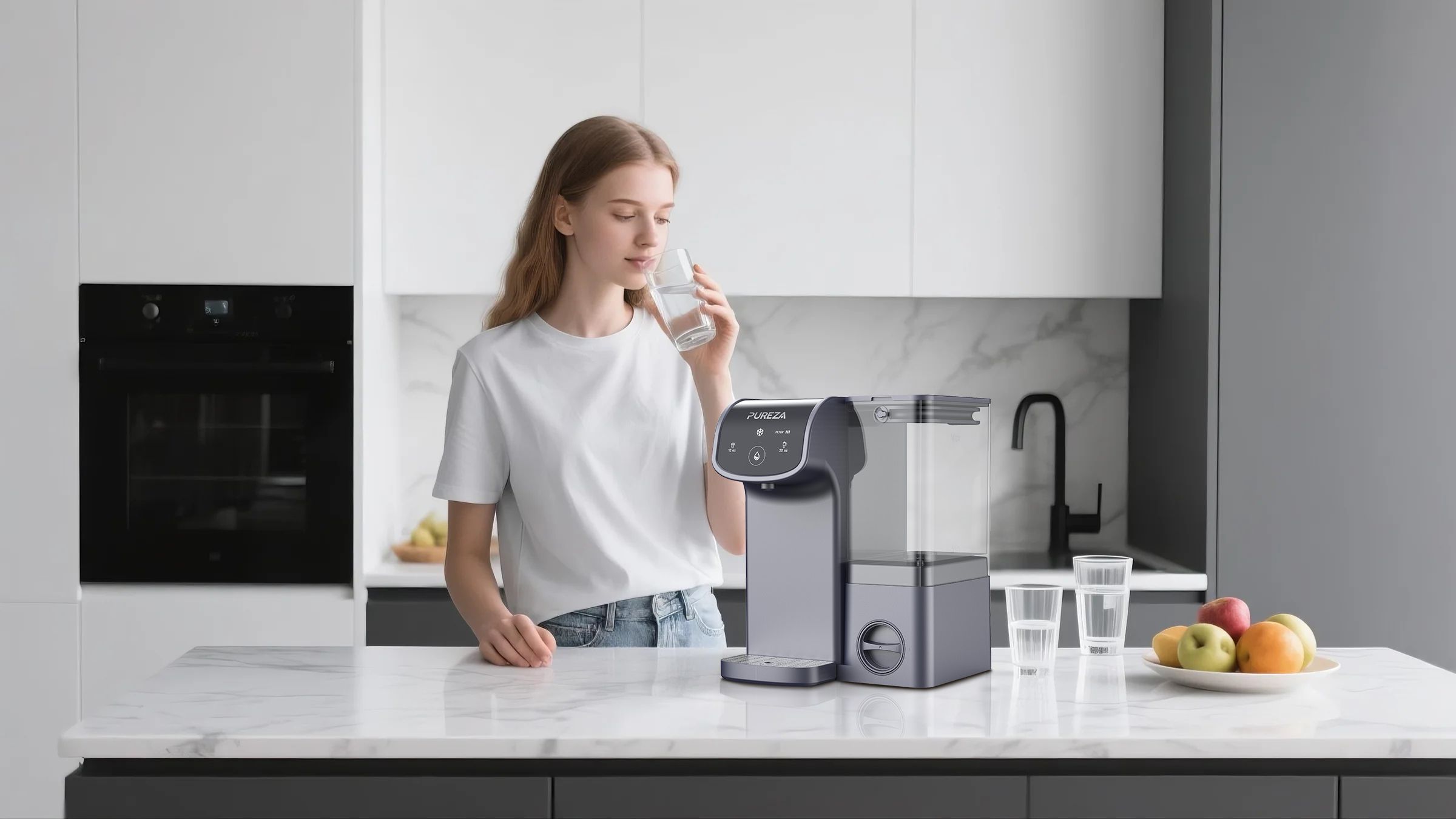
    Unlike traditional water pitchers or under-sink filtration systems, countertop water purifiers integrate multiple functions into one compact appliance. They are designed to purify water, store filtered water, provide convenient dispensing, and, in advanced models, deliver chilled drinking water whenever needed.


    As water quality concerns continue to evolve, consumers are looking beyond basic filtration. Modern drinking water solutions need to address a wider range of concerns, including microorganisms, chemical contaminants, heavy metals, and emerging pollutants, while also providing a convenient user experience.


    The PU-T02 countertop cold water dispenser combines advanced filtration technology with an integrated cooling system, providing a practical solution for households, offices, and modern living environments.


    But how does a countertop water purifier actually work?


    Water Intake: The Beginning of the Purification Process


    The working process of a countertop water purifier starts with water storage and intake.


    Unlike traditional under-sink systems that require permanent plumbing connections, countertop water purifiers typically use an integrated water tank. This design provides greater installation flexibility, allowing users to place the unit on a kitchen countertop, office area, or other convenient locations without complicated installation.


    For PU-T02, water is added into the built-in raw water tank before entering the filtration system. With a 4.5L water tank capacity, the system is designed to provide sufficient purified water for daily drinking needs while reducing the frequency of manual refilling.


    Once water enters the filtration system, multiple filtration mechanisms begin working to reduce different types of contaminants.


    Advanced Filtration: How PU-T02 Improves Water Quality


    The core function of any countertop water purifier is filtration.


    However, modern water quality challenges are becoming more complex. Traditional filtration methods may focus mainly on visible particles, sediment, or chlorine reduction, while today’s consumers are increasingly concerned about a broader range of contaminants.


    These concerns may include:


    - Microorganisms; 


    - PFAS compounds; 


    - BPA;


    - Lead and heavy metals; 


    - Pharmaceutical residues; 


    - Organic contaminants. 


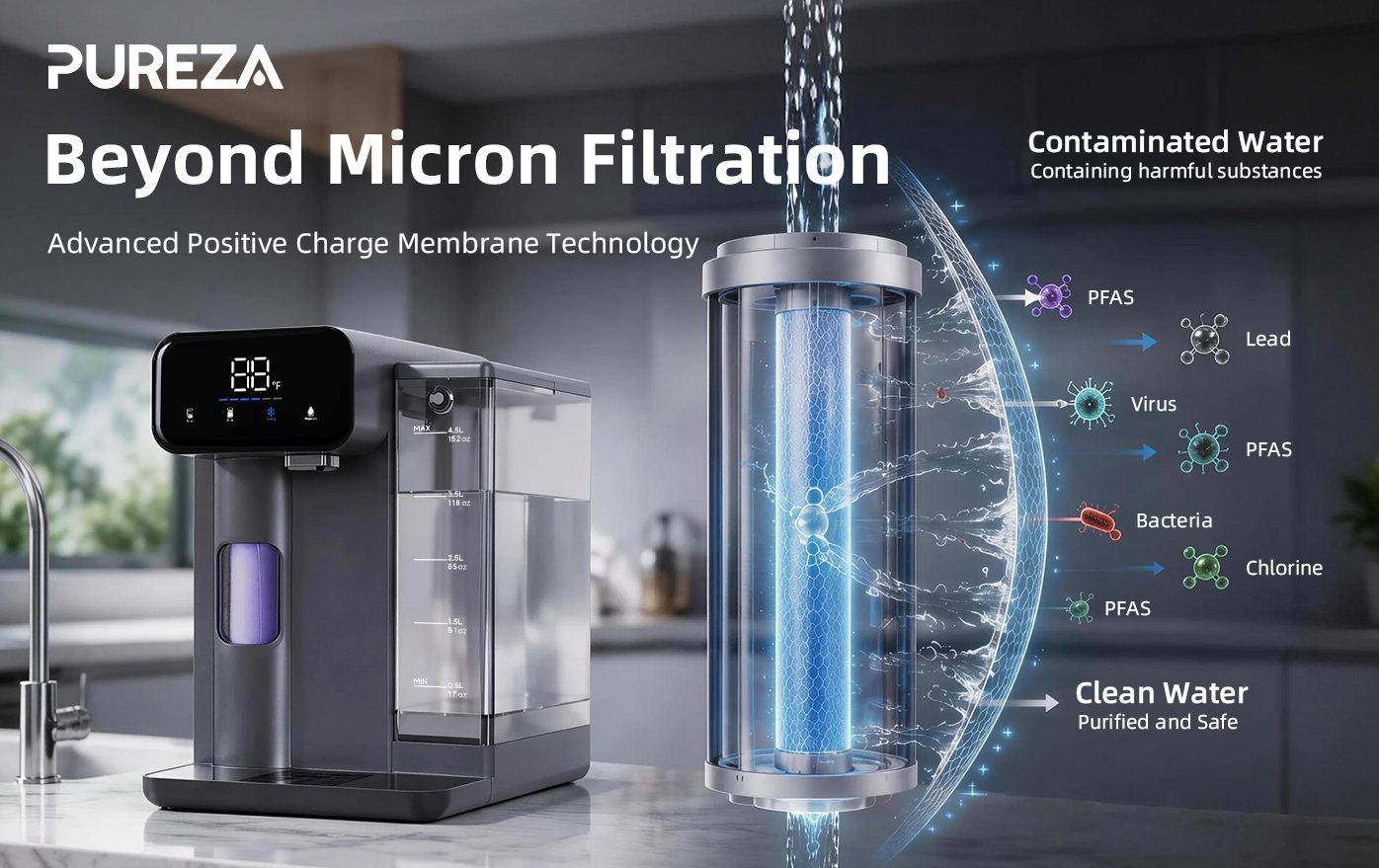
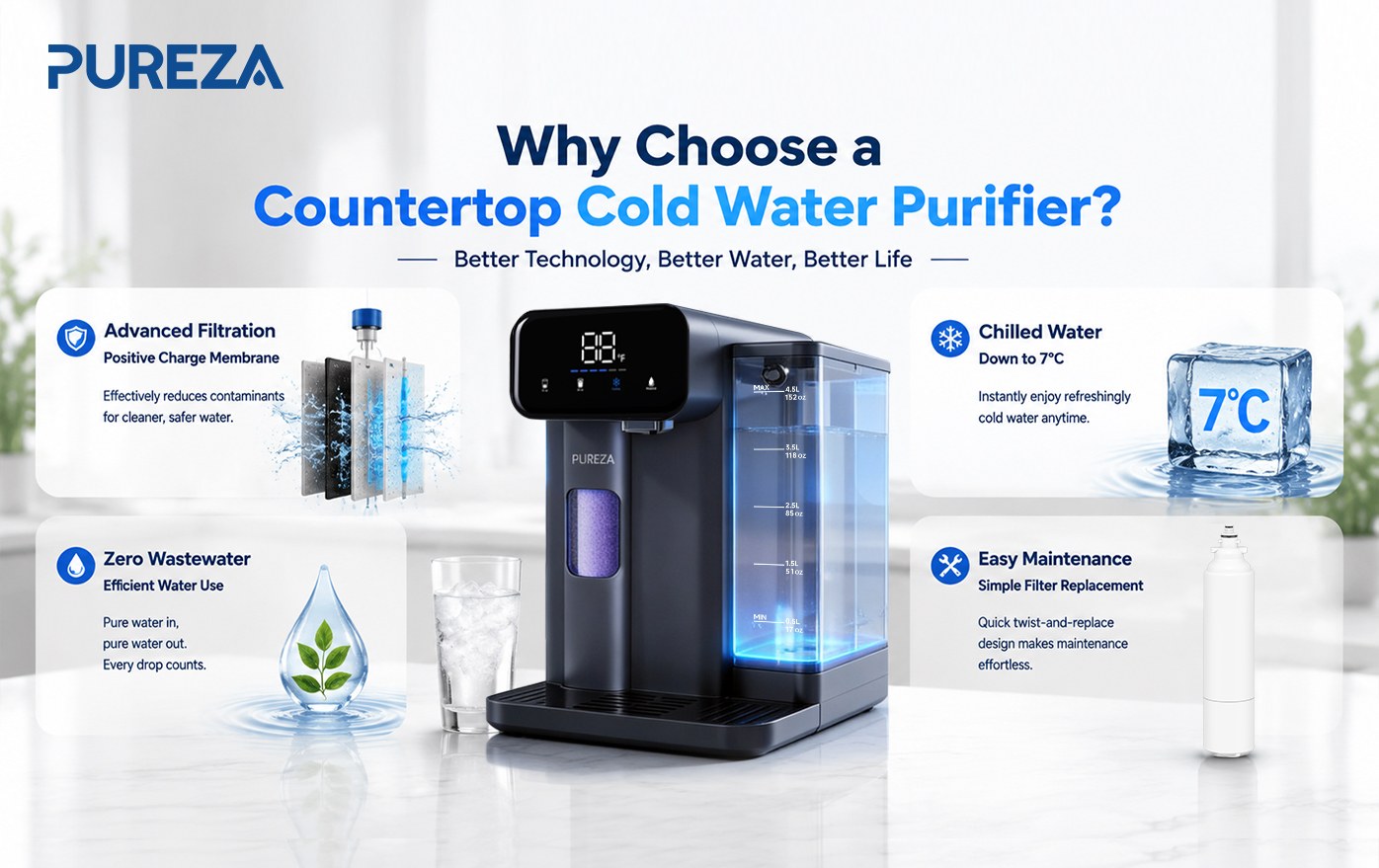
    To address these challenges, PU-T02 adopts advanced Positive Charge Membrane technology combined with activated carbon filtration.


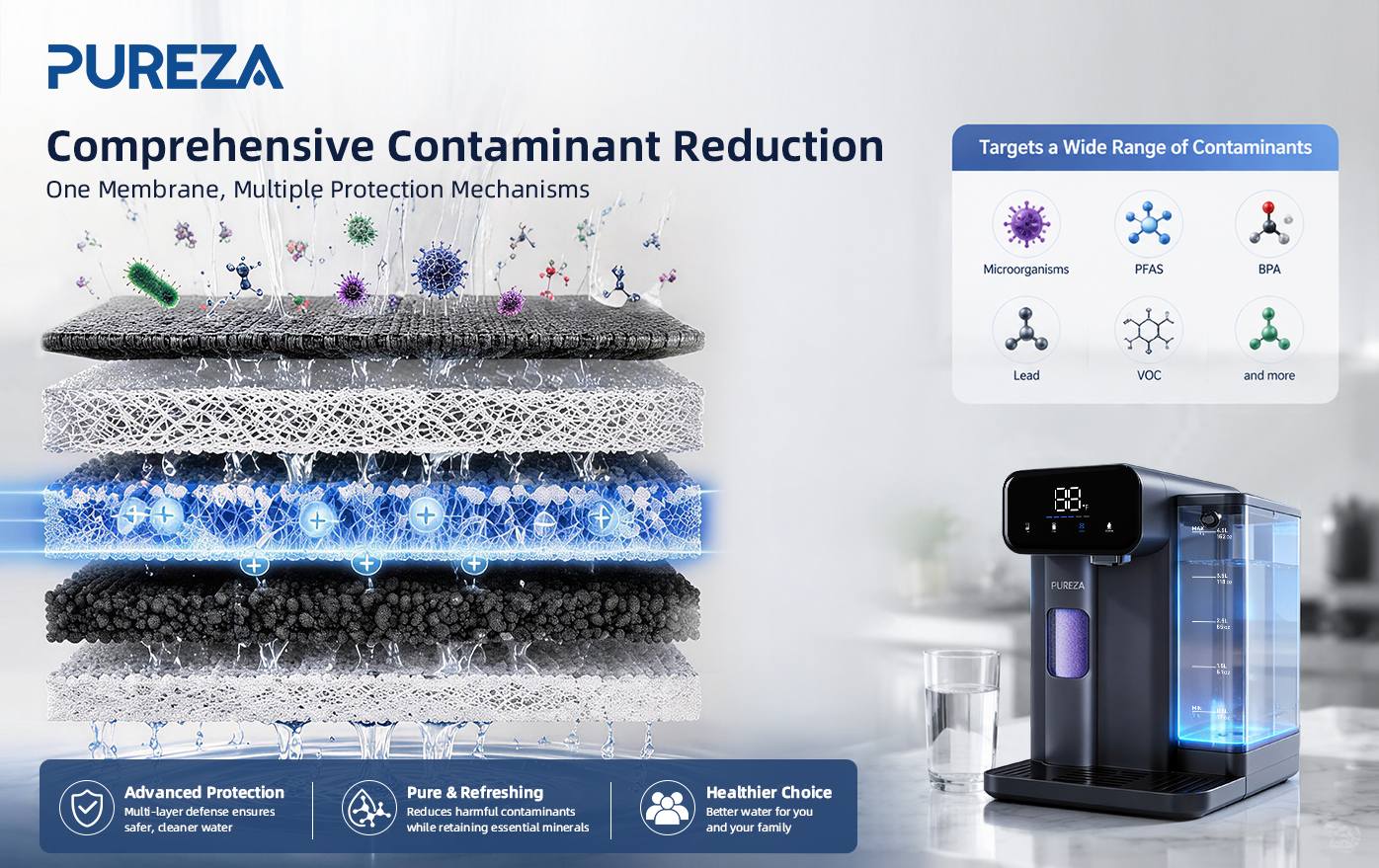
    Unlike conventional filtration methods that mainly depend on pore size, Positive Charge Membrane technology introduces an additional electrostatic adsorption mechanism. The membrane surface contains positively charged sites that attract and capture negatively charged contaminants through electrostatic interaction. This allows the filtration system to achieve a broader contaminant reduction capability while maintaining an efficient and compact structure.


    According to performance data, the Positive Charge Membrane technology provides:


    ≥99.9999% bacteria reduction; 


    ≥99.99% virus reduction; 


     ≥99.99% cyst reduction.


    When combined with activated carbon, the filtration system also supports the reduction of chlorine, PFAS, VOCs, BPA, and other organic compounds.


    This combination of physical filtration, electrostatic adsorption, and carbon adsorption allows PU-T02 to provide a more comprehensive drinking water solution compared with conventional single-function filters.


    Purified Water Storage: Ready-to-Use Drinking Water


    After passing through the filtration system, purified water is stored inside the unit for convenient access.


    This is one of the key differences between a countertop water dispenser and traditional filter pitchers. With a filter pitcher, users typically need to wait for water to pass through the filter before drinking. A zero-installation water purifier, however, provides a dedicated water storage system that keeps purified water ready for dispensing.


    PU-T02 is designed with a separate purified water pathway, helping maintain a more convenient drinking experience.


    The system also features an easy filter replacement design, allowing users to maintain filtration performance through regular cartridge replacement.


    By combining filtration and water storage in one appliance, countertop systems reduce daily operation steps and create a smoother user experience.


    Cooling Technology: From Purified Water to Chilled Water


    A major difference between a standard water purifier and a countertop cold water dispenser is the ability to provide chilled drinking water.


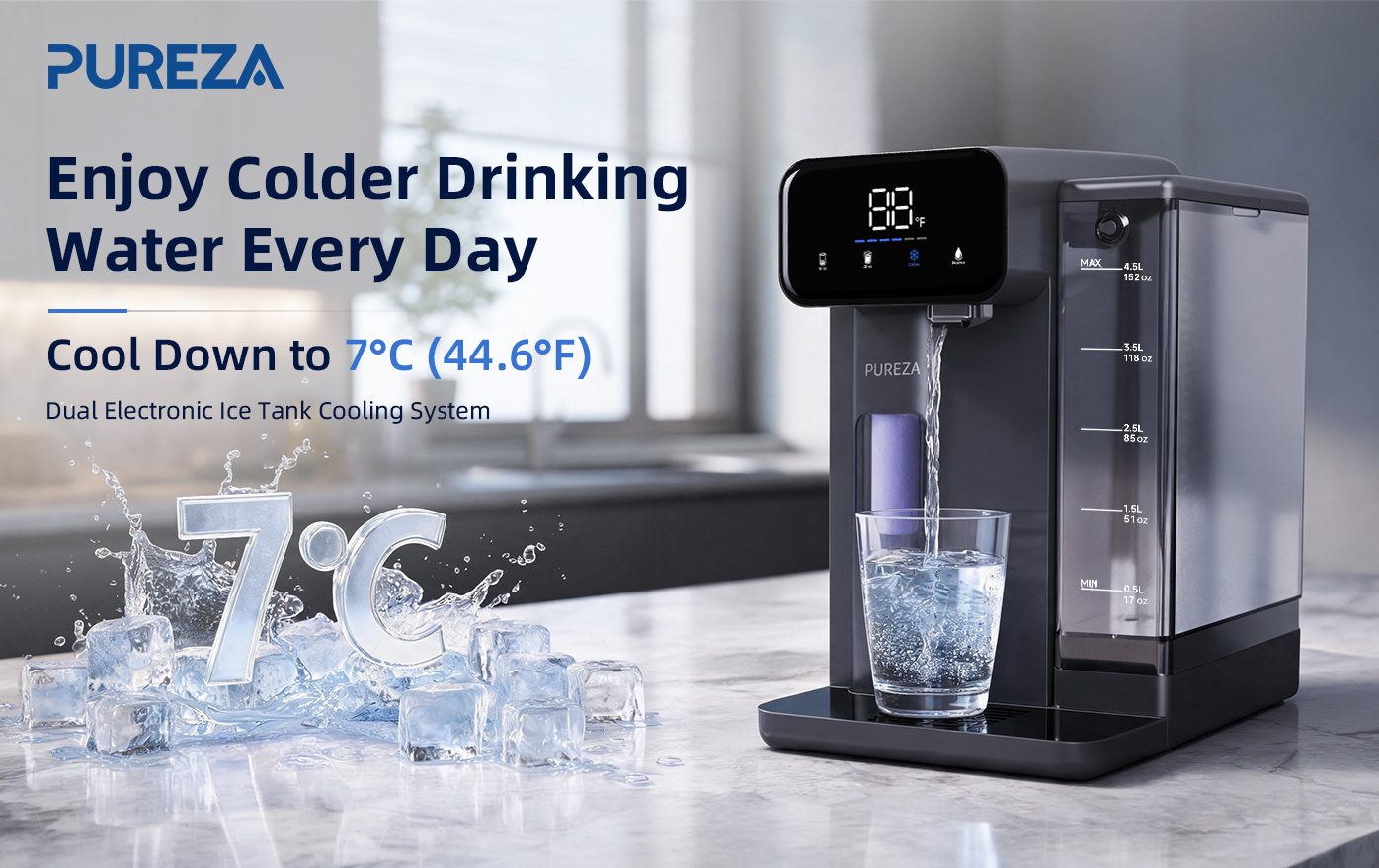
    After purification, PU-T02 uses a dual electronic ice tank cooling system to reduce water temperature. The system can cool water down to 7°C, providing refreshing chilled water directly from the countertop.


    Compared with using a refrigerator to cool bottled or filtered water, an integrated cooling system provides a more convenient solution by combining purification and temperature control in one appliance.


    For households and workplaces where cold drinking water is frequently needed, this design eliminates the need for separate filtration and cooling equipment. The result is a more efficient and convenient drinking water experience.


    Zero Wastewater Design: A More Efficient Filtration Approach


    Water efficiency is becoming an increasingly important consideration for modern purification systems.


    Many consumers are familiar with reverse osmosis (RO) systems, which provide excellent purification performance but typically require wastewater discharge during operation.


    PU-T02 adopts a zero wastewater filtration design.


    Instead of producing concentrated wastewater like traditional RO systems, the filtration system focuses on efficient contaminant reduction while maximizing water utilization. This makes PU-T02 especially suitable for countertop applications, where users expect a combination of purification performance, convenience, and environmental consideration.


    Why Countertop Water Purifiers Are Becoming a Modern Drinking Water Solution


    The value of a countertop water purifier is not only determined by filtration performance.


    A successful countertop water filtration system needs to combine several aspects:


    Reliable water purification; 


    Convenient operation; 


    Compact design; 


    Easy maintenance; 


    Improved drinking experience. 


    Traditional water treatment solutions often require installation work, additional storage containers, or separate cooling equipment. A countertop cold water dispenser integrates these functions into a single appliance.


    PU-T02 combines:


    · Advanced Positive Charge Membrane filtration; 


    · Zero wastewater operation; 


    · 7°C chilled water capability; 


    · 4.5L water storage capacity; 


    · Convenient filter replacement. 


    This integrated approach makes purified and chilled drinking water more accessible for everyday use.


    The Future of Countertop Water Purification


    A countertop water purifier works through multiple coordinated stages: water intake, advanced filtration, purified water storage, and temperature control. Each stage plays an important role in creating a complete drinking water solution.


    With its Positive Charge Membrane filtration technology and integrated cooling system, PU-T02 demonstrates how modern countertop water purifiers are evolving beyond simple filtration.


    The future of drinking water is not only about removing contaminants. It is about creating a smarter, more convenient, and more efficient way for people to access clean and refreshing water every day. By combining advanced filtration technology with practical countertop design, PU-T02 provides a new generation of drinking water experience for modern homes and workplaces.
  • How Positive Charge Membrane Technology Redefines Countertop Water Purification

    The Evolution of Water Purification Beyond Pore Size


    For decades, membrane filtration technologies have been developed around one fundamental principle: physical separation based on pore size.


    From microfiltration (MF) and ultrafiltration (UF) to reverse osmosis (RO), membrane technology has continuously improved by reducing pore sizes and increasing filtration precision. This approach has enabled effective removal of many traditional water contaminants, including suspended particles, microorganisms, and dissolved substances.


    However, the challenges facing modern drinking water quality are becoming increasingly complex.


    Today, water purification is no longer only focused on visible particles or conventional contaminants such as chlorine. Growing attention is being placed on emerging contaminants including PFAS, pharmaceutical residues, heavy metals, microorganisms, and other trace pollutants. These new challenges require filtration technologies that can achieve more than simple physical screening. A modern purification system needs to balance multiple factors: contaminant reduction performance, energy efficiency, system simplicity, and user convenience.


    Positive Charge Membrane technology represents a different approach to membrane filtration. Instead of relying solely on smaller pore sizes, it combines physical filtration with electrostatic adsorption, creating a more comprehensive contaminant capture mechanism. By introducing this advanced membrane technology into countertop cold water purification systems, Pureza PU-T02 countertop cold water dispenser demonstrates a new direction for efficient and practical household water purification.


    The Challenge of Traditional Filtration Technologies


    Understanding the Limits of Size-Based Filtration


    Traditional membrane filtration technologies have played an important role in water treatment for decades. However, each filtration method has its own advantages and limitations depending on the application.


    Ultrafiltration (UF) membranes mainly work through physical size exclusion. With typical pore sizes ranging from approximately 0.01 to 0.1 microns, UF technology is effective at reducing suspended particles, colloids, and many bacteria. However, because UF relies primarily on physical separation, its ability to remove dissolved contaminants is limited.


    Many emerging contaminants, including PFAS, heavy metals, pharmaceutical residues, and certain organic compounds, are much smaller than membrane pores or exist in dissolved forms, making them difficult to remove through conventional size-based filtration alone. Virus removal performance can also vary depending on membrane structure and operating conditions, creating additional challenges for applications requiring higher levels of microbial protection.


    On the other hand, reverse osmosis (RO) provides excellent purification performance by using pressure-driven separation through a semi-permeable membrane. RO technology is widely recognized for its ability to reduce dissolved salts, TDS, and many chemical contaminants. However, traditional RO systems also require higher system complexity, including high-pressure pumps and additional components. In household applications, RO systems may also generate wastewater and remove naturally occurring minerals during the purification process.


    Therefore, while RO remains an effective solution for specific applications such as desalination and high TDS reduction, there is increasing demand for filtration technologies that provide strong contaminant control while maintaining efficiency and simplicity. This creates an important opportunity for a new generation of filtration technology between traditional UF and RO solutions.


    Beyond Pore Size: The Science Behind Positive Charge Membrane Technology


    A Different Filtration Mechanism Based on Electrostatic Capture


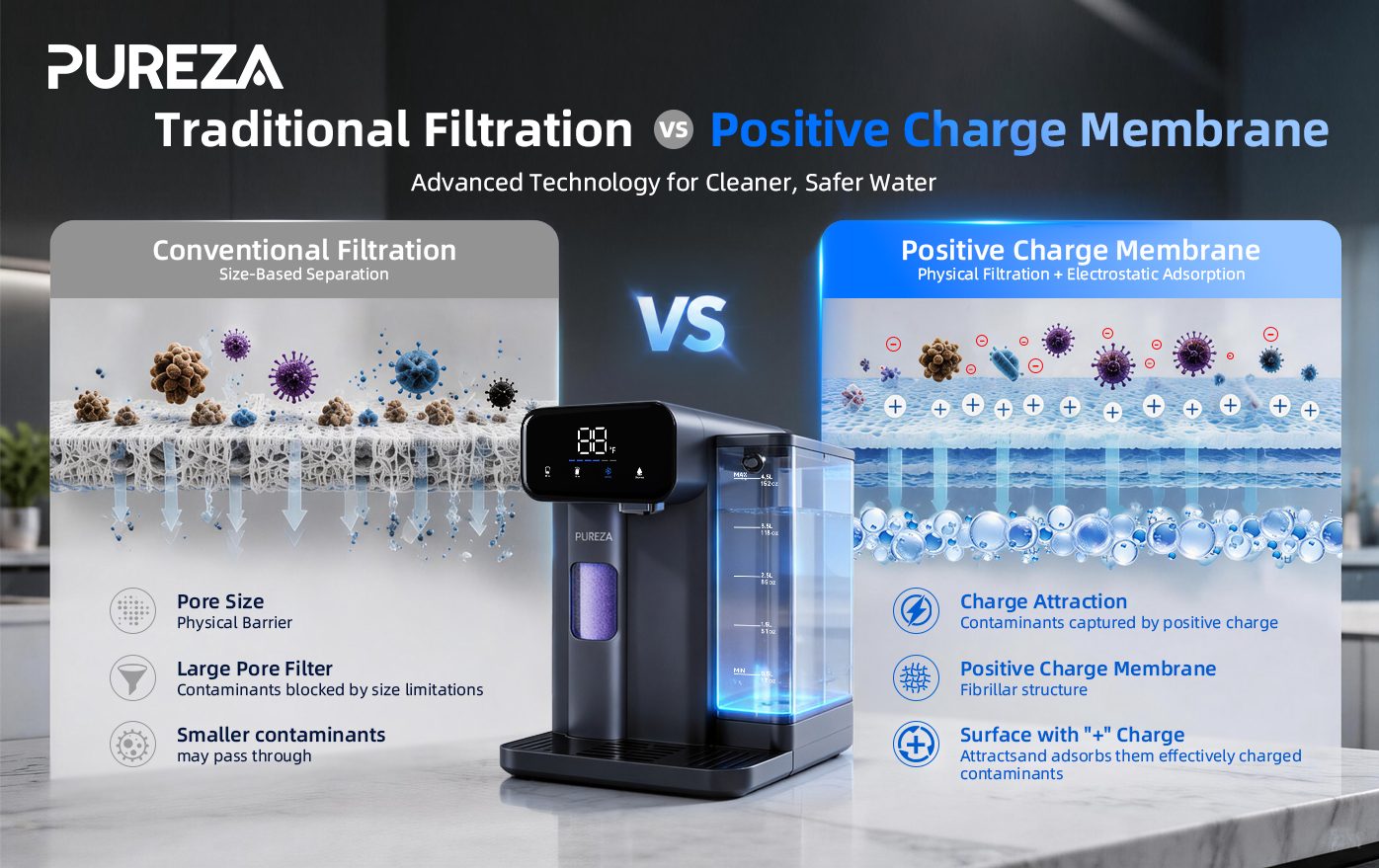
    Traditional membrane filtration can be compared to a physical sieve. The membrane blocks contaminants mainly based on whether their size exceeds the pore structure. Positive Charge Membrane technology introduces a different concept.


    Instead of depending only on pore size reduction, this technology uses a combination of advanced fiber structure and electrostatic adsorption to capture contaminants.


    The membrane is manufactured using nano-scale natural mineral fibers with a high specific surface area. Through specialized processing technology, these fibers form a multi-layer structure that provides numerous adsorption sites throughout the filtration media. The key feature of this technology is the introduction of positively charged aluminum ions (Al³⁺) onto the membrane surface.


    Many contaminants found in water, including microorganisms, heavy metal ions, and certain organic pollutants, naturally carry negative charges. When these negatively charged contaminants pass through the membrane, they are attracted and captured by the positively charged surface through electrostatic interaction. This mechanism allows the membrane to achieve high contaminant reduction performance without relying solely on extremely small pore sizes.


    Unlike conventional filtration concepts that focus only on “how small the pores are,” Positive Charge Membrane technology focuses on “how effectively contaminants can be captured.” This represents a shift from passive filtration toward a more active contaminant capture mechanism.


    Comprehensive Contaminant Reduction Through Combined Filtration Mechanisms


    Beyond Particle Removal: Addressing Biological and Chemical Contaminants


    One of the key advantages of Positive Charge Membrane technology is its ability to address a wider range of contaminants by combining multiple filtration mechanisms.


    Unlike conventional filtration technologies that mainly focus on a single category of contaminants, Positive Charge Membrane technology provides a more comprehensive approach by combining physical interception, electrostatic adsorption, and, when integrated with activated carbon, adsorption of organic compounds.


    This multi-functional filtration mechanism enables the membrane to effectively target both biological and chemical contaminants commonly found in drinking water.


    For microbial contaminants, Positive Charge Membrane technology demonstrates strong reduction performance.


    According to testing data, the membrane achieves:


    ≥99.9999% bacteria reduction;


    ≥99.99% virus reduction;


    ≥99.99% cyst reduction.


    The technology has demonstrated effectiveness against representative microorganisms, including E. coli, MS2 bacteriophage, Cryptosporidium, and Giardia.


    This performance is particularly important for household water filtration systems, where users increasingly expect not only improved taste and clarity, but also reliable protection against microbial contamination.


    Beyond microorganisms, the membrane technology also provides capabilities for reducing various chemical contaminants.


    When combined with activated carbon, the Positive Charge Membrane structure creates a complementary filtration system. The activated carbon component contributes adsorption capacity for organic compounds, while the positively charged membrane surface enhances the capture of negatively charged contaminants.


    This combined mechanism enables reduction of contaminants such as chlorine, PFAS compounds including PFOA and PFOS, VOCs, BPA, PCB, and pharmaceutical residues.


    The technology also demonstrates reduction capability for several heavy metals, including lead (Pb), chromium (Cr⁶⁺), copper (Cu), and iron (Fe).


    Through this combination of physical filtration and electrostatic adsorption, Positive Charge Membrane technology provides a broader protection range compared with filtration systems that rely on a single removal mechanism.


    Why Positive Charge Membrane Technology Fits the Future of Countertop Water Purifiers


    Balancing Performance, Efficiency, and User Convenience


    Countertop water purifiers have unique requirements compared with traditional under-sink or whole-house filtration systems.


    Because these systems are designed for direct consumer use, filtration technology must achieve a balance between purification performance, compact design, energy efficiency, and ease of maintenance.


    Positive Charge Membrane technology provides several characteristics that make it suitable for countertop applications.


    First, the technology operates without the high-pressure requirements typically associated with reverse osmosis systems.


    Traditional RO systems require pressure-driven separation, which means additional components such as high-pressure pumps are necessary. Positive Charge Membrane technology, by contrast, utilizes electrostatic adsorption mechanisms and can operate under lower-pressure conditions.


    This helps simplify system design and improves suitability for compact countertop products.


    Second, the technology supports zero wastewater operation.


    Unlike RO systems that separate concentrated contaminants into wastewater streams, Positive Charge Membrane filtration does not require wastewater discharge during normal operation.


    This characteristic is particularly valuable for household countertop water dispensers, where consumers increasingly consider water efficiency and environmental impact.


    Third, the filtration mechanism differs from desalination-based purification.


    While RO reduces dissolved minerals as part of the purification process, Positive Charge Membrane technology focuses on contaminant capture through physical filtration and electrostatic interaction, allowing naturally occurring minerals to remain in the water.


    For everyday drinking water applications, this provides a more balanced purification approach.


    PU-T02 Countertop Cold Water Dispenser: Applying Advanced Membrane Technology to Everyday Chilled Water Experience


    A New Generation of Countertop Cold Water Purification


    The development of advanced filtration technology is ultimately about solving real-world drinking water challenges.


    By integrating Positive Charge Membrane technology into the Pureza PU-T02 countertop water dispenser, Pureza combines advanced purification performance with the convenience of chilled drinking water.


    Unlike traditional water filtration systems that may require complex installation or produce wastewater, PU-T02 is designed around a simpler user experience.


    The system combines:


    - Advanced contaminant reduction through Positive Charge Membrane technology;


    - Zero wastewater filtration design;


    - Countertop-friendly integration;


    - Convenient filter replacement;


    - Chilled water dispensing capability.


    With its filtration technology and cooling function, PU-T02 provides a practical solution for households and commercial environments seeking safer, cleaner, and more convenient drinking water.


    The value of PU-T02 is not only in providing filtered water, but in integrating advanced filtration science into an everyday appliance.


    By combining high-performance membrane technology with a compact countertop design, PU-T02 represents a new approach to modern water purification — one that focuses on efficiency, convenience, and reliable drinking water quality.


    Moving Beyond Smaller Pores Toward Smarter Filtration


    The future of water purification is not simply defined by smaller membrane pores.


    While pore size remains an important factor in filtration performance, modern water challenges require technologies that can address different types of contaminants through more intelligent mechanisms.


    Positive Charge Membrane technology demonstrates how advanced material science can expand the possibilities of membrane filtration.


    By combining physical filtration with electrostatic adsorption, it provides an effective approach for reducing microorganisms, chemical contaminants, and heavy metals while maintaining system efficiency and convenience.


    For countertop water purification, this technology represents an important step toward more balanced solutions — delivering advanced filtration performance without unnecessary complexity.


    Through PU-T02, Pureza brings this next-generation filtration concept into everyday drinking water applications, providing users with a smarter way to experience purified chilled water.

  • How to Choose the Right Countertop Water Purifier for Home or Office

    A Complete Guide to Finding the Right Balance Between Water Quality, Cooling, and Convenience


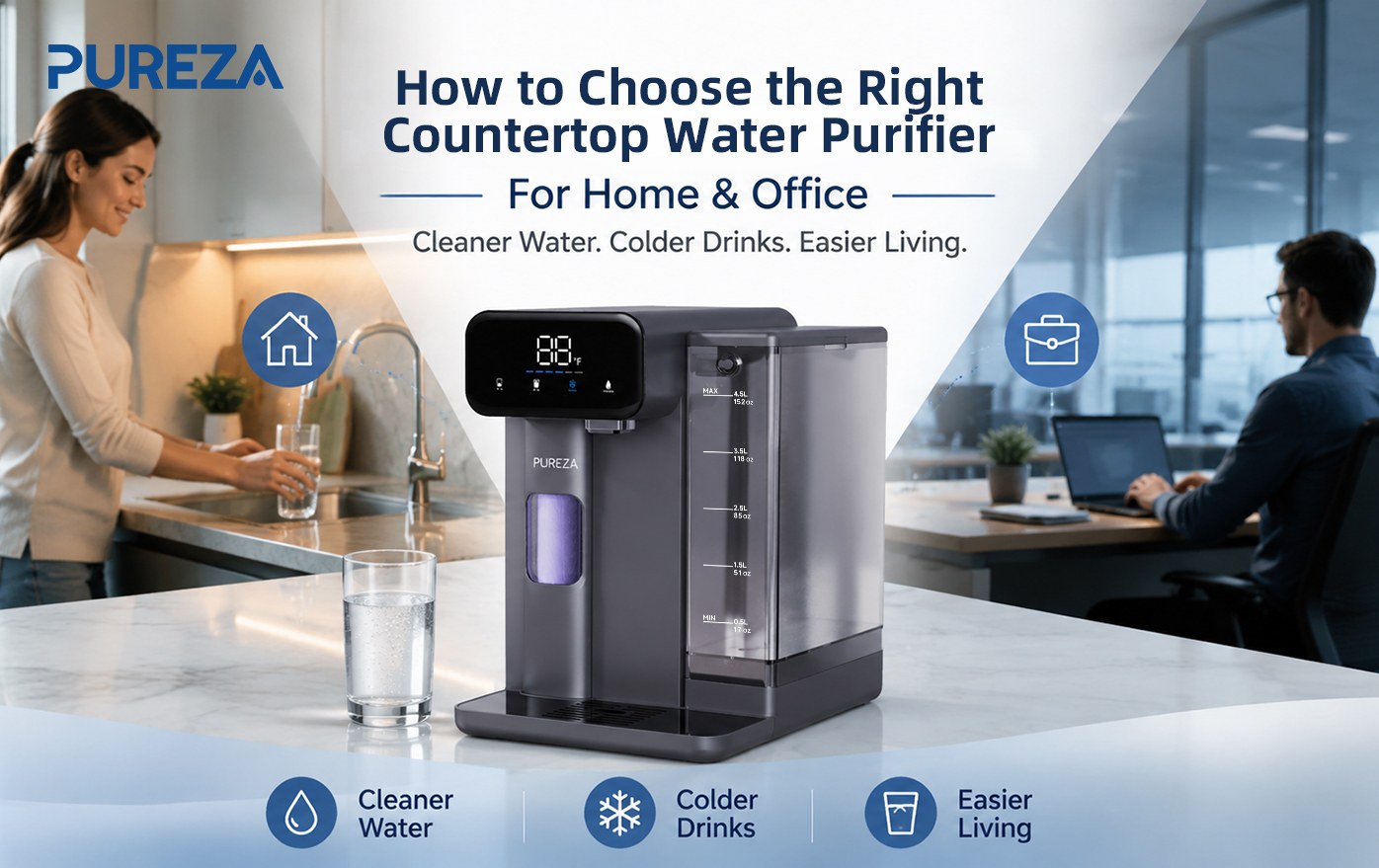
    Clean drinking water has become an essential part of modern lifestyles. Whether at home, in a home office, or in a workplace environment, people are looking for a more convenient way to access safe, great-tasting water without relying on bottled water or complicated filtration systems.


    Traditional drinking water solutions each have their own limitations. Bottled water requires continuous purchasing, storage space, and creates additional plastic waste. Water pitchers offer a simple filtration solution but usually have limited capacity and cannot provide chilled water instantly. Under-sink filtration systems can deliver high-performance purification but often require professional installation and permanent plumbing changes.


    This is why countertop water dispensers are becoming increasingly popular. By combining filtration, water dispensing, and cooling functions into one compact appliance, they provide a flexible solution for modern homes and offices.


    However, choosing the right countertop water purifier requires more than comparing appearance or basic specifications. The ideal system should match your daily needs, including water quality concerns, cooling performance, capacity, maintenance, and overall user experience.


    Start With Filtration Performance: Understanding What Your Water Purifier Can Remove


    The most important function of any water purifier is improving drinking water quality.


    While many basic filters can reduce chlorine and improve taste, modern consumers are increasingly concerned about a wider range of contaminants that may affect water safety and quality. Depending on the local water supply and environment, users may pay attention to substances such as lead, PFAS, BPA, pharmaceutical residues, microplastics, and microorganisms.


    For both residential and office applications, a good countertop water purifier should provide reliable filtration performance while maintaining convenient daily operation.


    Different filtration technologies work in different ways. Activated carbon is widely used for improving taste and reducing chlorine, while advanced membrane technologies can provide additional protection by targeting smaller particles and more complex contaminants.


    PU-T02 countertop cold water dispenser uses positively charged membrane technology, which goes beyond traditional size-based filtration. By combining physical filtration with electrostatic adsorption, the membrane helps capture a broader range of contaminants.


    The filtration system is designed to reduce:


    Chlorine and unpleasant odors


    PFAS, BPA, lead, and pharmaceutical residues


    Particles and microplastics down to 0.5 micron


    Up to 99.9% of microorganisms, including bacteria and viruses


    For families, this means greater confidence in everyday drinking water. For offices, it provides employees and visitors with a reliable source of filtered water throughout the day.


    Look Beyond Filtration: Cooling Performance Defines the Drinking Experience


    For many users, especially in North America and Europe, drinking water is not only about purity but also temperature. Cold water is part of everyday hydration habits — whether it is a glass of water after exercise, a refreshing drink during a busy workday, or chilled water available for family members throughout the day.


    However, not all countertop cold water purifiers provide the same cooling experience. Some products mainly focus on filtration and only offer room-temperature water. Others provide cooling functions but cannot maintain a consistently refreshing temperature for daily use.


    When choosing a countertop cold water purifier, users should consider:


    How cold the water can actually reach


    Whether the cooling system can maintain stable performance


    Whether enough chilled water is available for multiple users


    Designed specifically for markets where cold drinking water is preferred, Pureza countertop water dispenser delivers a stronger cooling experience with a dual electronic ice tank cooling system.


    The system can cool water down to 7°C (44.6°F), compared with many similar countertop products that typically provide water around 10°C. Its 1.2L chilled water tank stores cooled water in advance, making it suitable for daily family consumption and small office environments where multiple people need access to cold water.


    Consider Capacity and Water Flow: Will It Keep Up With Your Daily Routine?


    A countertop water purifier should fit the way people actually use water.


    For a family, the biggest challenge is often convenience. A purifier with insufficient capacity may require frequent refilling, especially when several family members use it throughout the day. In office environments, the requirements are slightly different. Employees need quick access to drinking water, and slow dispensing can reduce the overall user experience. Therefore, capacity and flow rate are two important factors when selecting a countertop purifier.


    PU-T02 is designed to support both home and office scenarios with a 4.5L raw water tank, reducing the need for frequent refilling. At the same time, its 1L/min dispensing speed allows users to fill cups and bottles quickly, making it suitable for busy daily routines.


    Small design details can also make a significant difference. With a 235mm cup clearance, PU-T02 can accommodate a wide range of cups, tumblers, and drinking containers, giving users more flexibility in everyday use.


    Choose a Countertop Purifier That Fits Your Space and Lifestyle


    One of the biggest advantages of countertop water purifiers is flexibility.


    Unlike traditional under-sink systems, countertop models do not require complicated installation or major changes to existing plumbing. This makes them especially suitable for apartments, rental homes, offices, and spaces where installation conditions are limited.


    For home users, convenience is often the priority. A countertop purifier should fit naturally into the kitchen environment while providing easy access to safe and refreshing drinking water.


    For office users, simplicity is even more important. A workplace water solution should be easy for everyone to use without requiring specialized operation or frequent maintenance.


    PU-T02 follows a plug-and-play design concept:


    No plumbing installation required


    No wastewater production


    Easy countertop placement


    Simple daily operation


    Its preset dispensing options of 12oz and 20oz also match common drinking habits in North American markets, allowing users to quickly select a suitable water volume.


    Think About Long-Term Maintenance: A Better Purifier Should Be Easy to Live With


    Purchasing a water purifier is only the beginning. Long-term maintenance directly affects the user experience.


    Before choosing a countertop water purifier, users should consider:


    How often the filter needs to be replaced


    Whether replacement is simple


    Whether maintenance creates additional costs or inconvenience


    A system that requires complicated servicing may reduce the convenience that users expected in the first place.


    PU-T02 uses a replaceable filter cartridge designed for easy maintenance. The filter cartridge provides a lifespan of up to 1,135L, with a recommended replacement period of approximately six months depending on usage. This helps families and offices maintain consistent filtration performance while reducing the frequency of replacement.


    Choosing the Right Countertop Water Purifier for Different Scenarios


    The best countertop water purifier depends on where it will be used.


    For Homes


    Families typically look for:


    Safe and reliable drinking water


    Cold water availability


    Enough capacity for multiple family members


    Easy operation without installation


    A countertop purifier can provide a convenient solution for kitchens, apartments, and home offices.


    For Offices


    Workplaces often prioritize:


    Fast dispensing


    Low maintenance


    Reliable daily performance


    Comfortable user experience for employees and visitors


    Countertop water purifiers are suitable for small offices, meeting rooms, reception areas, and shared workspaces because they provide convenient drinking water without requiring plumbing changes.


    Finding the Right Countertop Water Purifier for Everyday Life


    Choosing the right countertop water purifier is about balancing multiple factors — not just filtration performance, but also cooling ability, capacity, convenience, and maintenance.


    A suitable system should provide:


    Advanced filtration technology for modern water concerns


    Reliable cold water performance


    Enough capacity for daily household or office use


    Fast and convenient dispensing


    Simple installation and maintenance


    PU-T02 combines positively charged membrane filtration, 7°C cold water cooling, dual electronic ice tank technology, large-capacity design, and user-friendly operation into one countertop solution.


    Whether placed in a family kitchen, home office, or workplace environment, it provides a practical way to enjoy cleaner, colder, and more convenient drinking water every day.

  • Countertop Water Purifiers A Strategic Opportunity for B2B Distributors in 2025

    As global concerns over water quality intensify, the demand for reliable, compact, and efficient water purification solutions is on the rise. Desktop water purifiers have emerged as a pivotal product category, offering both convenience and advanced technology. For B2B distributors, this presents a significant opportunity to meet the growing needs of various sectors.


    Market Overview: Robust Growth Trajectory


    The countertop water purifier market is experiencing substantial growth. In 2023, the global market was valued at approximately $15 billion and is projected to reach $15.03 billion by 2030, growing at a CAGR of 5.3% . This growth is driven by increasing health consciousness, urbanization, and the need for accessible clean drinking water.


    Key Drivers for B2B Adoption


    1. Health and Safety Concerns

    Businesses are prioritizing the health of employees and customers. With rising awareness of waterborne diseases, sectors such as hospitality, healthcare, and education are investing in NSF Certified Countertop Water Filter to ensure safety and compliance with health standards .


    2. Technological Advancements

    Modern desktop purifiers incorporate advanced technologies like reverse osmosis (RO), ultraviolet (UV) sterilization, and multi-stage filtration. These features enhance water quality and offer user-friendly interfaces, making them attractive to commercial establishments .


    3. Sustainability and Environmental Impact

    Eco-friendly solutions are becoming a priority. Desktop purifiers reduce reliance on single-use plastic bottles, aligning with global sustainability goals. Businesses are adopting these systems to minimize their environmental footprint and appeal to environmentally conscious consumers .


    4. Space Efficiency and Convenience

    The compact design of desktop purifiers makes them ideal for offices, restaurants, and other commercial spaces where space is at a premium. Their ease of installation and maintenance further adds to their appeal in B2B settings.


    Regional Insights: Asia-Pacific Leading the Charge


    The Asia-Pacific region is the fastest-growing market for desktop water purifiers, accounting for 34% of global revenue in 2023 . Rapid urbanization, industrialization, and increasing awareness of water quality issues are fueling demand in countries like China and India.


    Opportunities for B2B Distributors


    ·Diverse Product Offerings: Catering to various industries by offering models with specific features such as hot/cold water options, smart connectivity, and energy efficiency.

    ·After-Sales Services: Providing maintenance and support services to build long-term relationships with clients.

    ·Customization: Offering tailored solutions to meet the unique needs of different sectors, enhancing customer satisfaction and loyalty.


    The desktop water purifier market presents a lucrative opportunity for B2B distributors. By partnering with a OEM Countertop Water Purifier Manufacturer (like PUREZA), B2B traders can tap into this high-margin segment with confidence.