{ water filtration system }

  • How Positive Charge Membrane Technology Redefines Countertop Water Purification

    The Evolution of Water Purification Beyond Pore Size


    For decades, membrane filtration technologies have been developed around one fundamental principle: physical separation based on pore size.


    From microfiltration (MF) and ultrafiltration (UF) to reverse osmosis (RO), membrane technology has continuously improved by reducing pore sizes and increasing filtration precision. This approach has enabled effective removal of many traditional water contaminants, including suspended particles, microorganisms, and dissolved substances.


    However, the challenges facing modern drinking water quality are becoming increasingly complex.


    Today, water purification is no longer only focused on visible particles or conventional contaminants such as chlorine. Growing attention is being placed on emerging contaminants including PFAS, pharmaceutical residues, heavy metals, microorganisms, and other trace pollutants. These new challenges require filtration technologies that can achieve more than simple physical screening. A modern purification system needs to balance multiple factors: contaminant reduction performance, energy efficiency, system simplicity, and user convenience.


    Positive Charge Membrane technology represents a different approach to membrane filtration. Instead of relying solely on smaller pore sizes, it combines physical filtration with electrostatic adsorption, creating a more comprehensive contaminant capture mechanism. By introducing this advanced membrane technology into countertop cold water purification systems, Pureza PU-T02 countertop cold water dispenser demonstrates a new direction for efficient and practical household water purification.


    The Challenge of Traditional Filtration Technologies


    Understanding the Limits of Size-Based Filtration


    Traditional membrane filtration technologies have played an important role in water treatment for decades. However, each filtration method has its own advantages and limitations depending on the application.


    Ultrafiltration (UF) membranes mainly work through physical size exclusion. With typical pore sizes ranging from approximately 0.01 to 0.1 microns, UF technology is effective at reducing suspended particles, colloids, and many bacteria. However, because UF relies primarily on physical separation, its ability to remove dissolved contaminants is limited.


    Many emerging contaminants, including PFAS, heavy metals, pharmaceutical residues, and certain organic compounds, are much smaller than membrane pores or exist in dissolved forms, making them difficult to remove through conventional size-based filtration alone. Virus removal performance can also vary depending on membrane structure and operating conditions, creating additional challenges for applications requiring higher levels of microbial protection.


    On the other hand, reverse osmosis (RO) provides excellent purification performance by using pressure-driven separation through a semi-permeable membrane. RO technology is widely recognized for its ability to reduce dissolved salts, TDS, and many chemical contaminants. However, traditional RO systems also require higher system complexity, including high-pressure pumps and additional components. In household applications, RO systems may also generate wastewater and remove naturally occurring minerals during the purification process.


    Therefore, while RO remains an effective solution for specific applications such as desalination and high TDS reduction, there is increasing demand for filtration technologies that provide strong contaminant control while maintaining efficiency and simplicity. This creates an important opportunity for a new generation of filtration technology between traditional UF and RO solutions.


    Beyond Pore Size: The Science Behind Positive Charge Membrane Technology


    A Different Filtration Mechanism Based on Electrostatic Capture


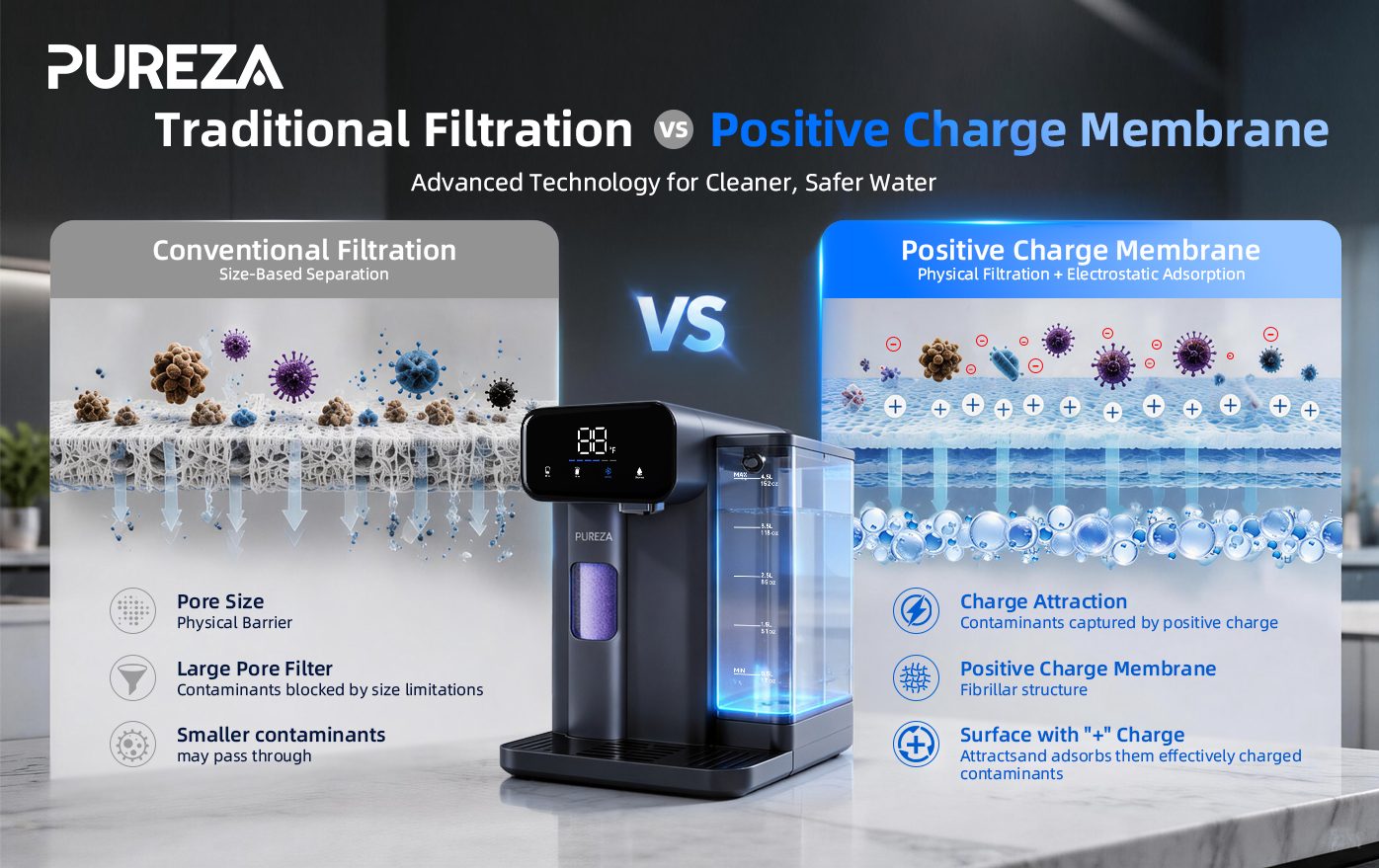
    Traditional membrane filtration can be compared to a physical sieve. The membrane blocks contaminants mainly based on whether their size exceeds the pore structure. Positive Charge Membrane technology introduces a different concept.


    Instead of depending only on pore size reduction, this technology uses a combination of advanced fiber structure and electrostatic adsorption to capture contaminants.


    The membrane is manufactured using nano-scale natural mineral fibers with a high specific surface area. Through specialized processing technology, these fibers form a multi-layer structure that provides numerous adsorption sites throughout the filtration media. The key feature of this technology is the introduction of positively charged aluminum ions (Al³⁺) onto the membrane surface.


    Many contaminants found in water, including microorganisms, heavy metal ions, and certain organic pollutants, naturally carry negative charges. When these negatively charged contaminants pass through the membrane, they are attracted and captured by the positively charged surface through electrostatic interaction. This mechanism allows the membrane to achieve high contaminant reduction performance without relying solely on extremely small pore sizes.


    Unlike conventional filtration concepts that focus only on “how small the pores are,” Positive Charge Membrane technology focuses on “how effectively contaminants can be captured.” This represents a shift from passive filtration toward a more active contaminant capture mechanism.


    Comprehensive Contaminant Reduction Through Combined Filtration Mechanisms


    Beyond Particle Removal: Addressing Biological and Chemical Contaminants


    One of the key advantages of Positive Charge Membrane technology is its ability to address a wider range of contaminants by combining multiple filtration mechanisms.


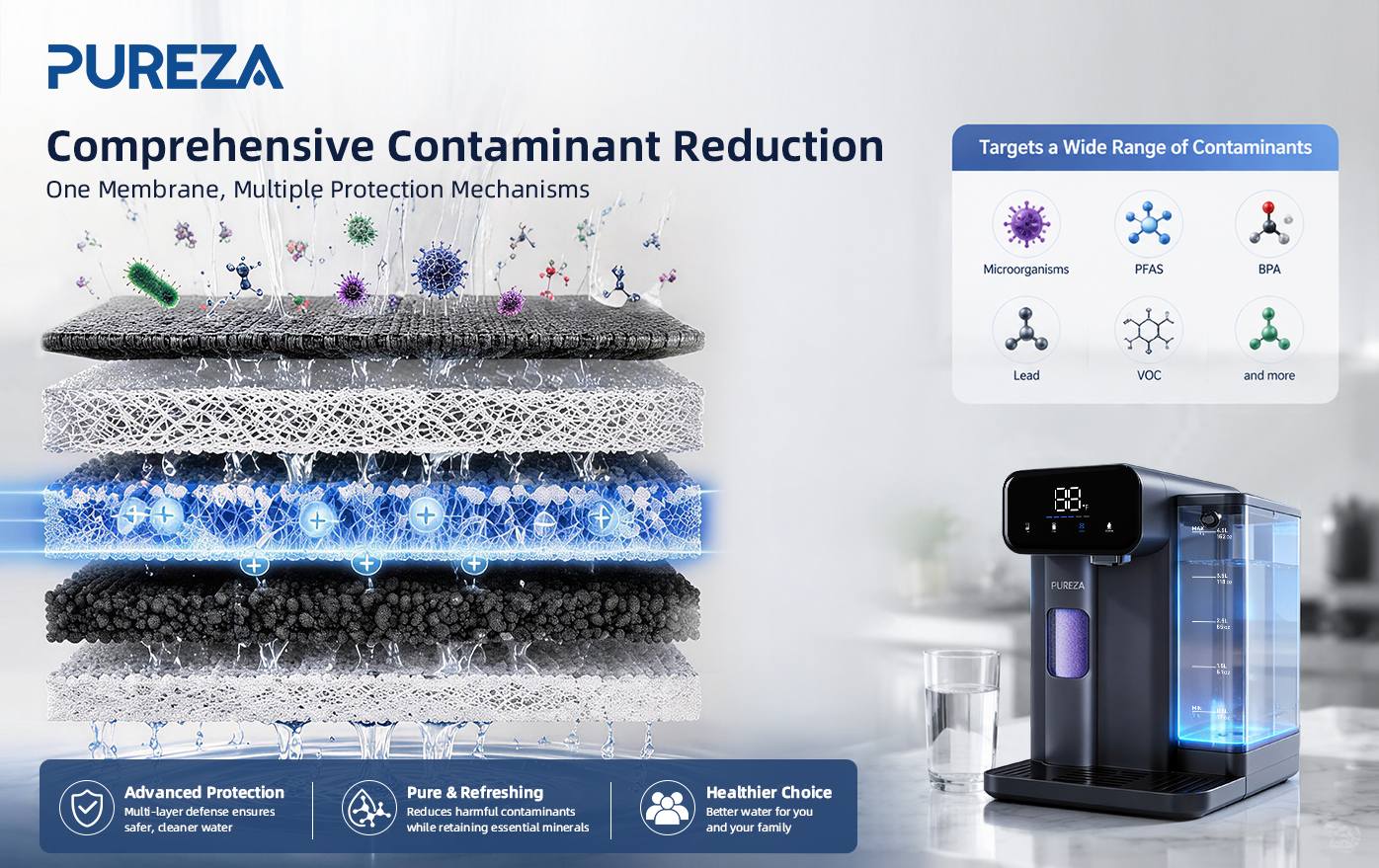
    Unlike conventional filtration technologies that mainly focus on a single category of contaminants, Positive Charge Membrane technology provides a more comprehensive approach by combining physical interception, electrostatic adsorption, and, when integrated with activated carbon, adsorption of organic compounds.


    This multi-functional filtration mechanism enables the membrane to effectively target both biological and chemical contaminants commonly found in drinking water.


    For microbial contaminants, Positive Charge Membrane technology demonstrates strong reduction performance.


    According to testing data, the membrane achieves:


    ≥99.9999% bacteria reduction;


    ≥99.99% virus reduction;


    ≥99.99% cyst reduction.


    The technology has demonstrated effectiveness against representative microorganisms, including E. coli, MS2 bacteriophage, Cryptosporidium, and Giardia.


    This performance is particularly important for household water filtration systems, where users increasingly expect not only improved taste and clarity, but also reliable protection against microbial contamination.


    Beyond microorganisms, the membrane technology also provides capabilities for reducing various chemical contaminants.


    When combined with activated carbon, the Positive Charge Membrane structure creates a complementary filtration system. The activated carbon component contributes adsorption capacity for organic compounds, while the positively charged membrane surface enhances the capture of negatively charged contaminants.


    This combined mechanism enables reduction of contaminants such as chlorine, PFAS compounds including PFOA and PFOS, VOCs, BPA, PCB, and pharmaceutical residues.


    The technology also demonstrates reduction capability for several heavy metals, including lead (Pb), chromium (Cr⁶⁺), copper (Cu), and iron (Fe).


    Through this combination of physical filtration and electrostatic adsorption, Positive Charge Membrane technology provides a broader protection range compared with filtration systems that rely on a single removal mechanism.


    Why Positive Charge Membrane Technology Fits the Future of Countertop Water Purifiers


    Balancing Performance, Efficiency, and User Convenience


    Countertop water purifiers have unique requirements compared with traditional under-sink or whole-house filtration systems.


    Because these systems are designed for direct consumer use, filtration technology must achieve a balance between purification performance, compact design, energy efficiency, and ease of maintenance.


    Positive Charge Membrane technology provides several characteristics that make it suitable for countertop applications.


    First, the technology operates without the high-pressure requirements typically associated with reverse osmosis systems.


    Traditional RO systems require pressure-driven separation, which means additional components such as high-pressure pumps are necessary. Positive Charge Membrane technology, by contrast, utilizes electrostatic adsorption mechanisms and can operate under lower-pressure conditions.


    This helps simplify system design and improves suitability for compact countertop products.


    Second, the technology supports zero wastewater operation.


    Unlike RO systems that separate concentrated contaminants into wastewater streams, Positive Charge Membrane filtration does not require wastewater discharge during normal operation.


    This characteristic is particularly valuable for household countertop water dispensers, where consumers increasingly consider water efficiency and environmental impact.


    Third, the filtration mechanism differs from desalination-based purification.


    While RO reduces dissolved minerals as part of the purification process, Positive Charge Membrane technology focuses on contaminant capture through physical filtration and electrostatic interaction, allowing naturally occurring minerals to remain in the water.


    For everyday drinking water applications, this provides a more balanced purification approach.


    PU-T02 Countertop Cold Water Dispenser: Applying Advanced Membrane Technology to Everyday Chilled Water Experience


    A New Generation of Countertop Cold Water Purification


    The development of advanced filtration technology is ultimately about solving real-world drinking water challenges.


    By integrating Positive Charge Membrane technology into the Pureza PU-T02 countertop water dispenser, Pureza combines advanced purification performance with the convenience of chilled drinking water.


    Unlike traditional water filtration systems that may require complex installation or produce wastewater, PU-T02 is designed around a simpler user experience.


    The system combines:


    - Advanced contaminant reduction through Positive Charge Membrane technology;


    - Zero wastewater filtration design;


    - Countertop-friendly integration;


    - Convenient filter replacement;


    - Chilled water dispensing capability.


    With its filtration technology and cooling function, PU-T02 provides a practical solution for households and commercial environments seeking safer, cleaner, and more convenient drinking water.


    The value of PU-T02 is not only in providing filtered water, but in integrating advanced filtration science into an everyday appliance.


    By combining high-performance membrane technology with a compact countertop design, PU-T02 represents a new approach to modern water purification — one that focuses on efficiency, convenience, and reliable drinking water quality.


    Moving Beyond Smaller Pores Toward Smarter Filtration


    The future of water purification is not simply defined by smaller membrane pores.


    While pore size remains an important factor in filtration performance, modern water challenges require technologies that can address different types of contaminants through more intelligent mechanisms.


    Positive Charge Membrane technology demonstrates how advanced material science can expand the possibilities of membrane filtration.


    By combining physical filtration with electrostatic adsorption, it provides an effective approach for reducing microorganisms, chemical contaminants, and heavy metals while maintaining system efficiency and convenience.


    For countertop water purification, this technology represents an important step toward more balanced solutions — delivering advanced filtration performance without unnecessary complexity.


    Through PU-T02, Pureza brings this next-generation filtration concept into everyday drinking water applications, providing users with a smarter way to experience purified chilled water.
  • How Replacement Water Filters Affect Water Quality and Appliance Performance

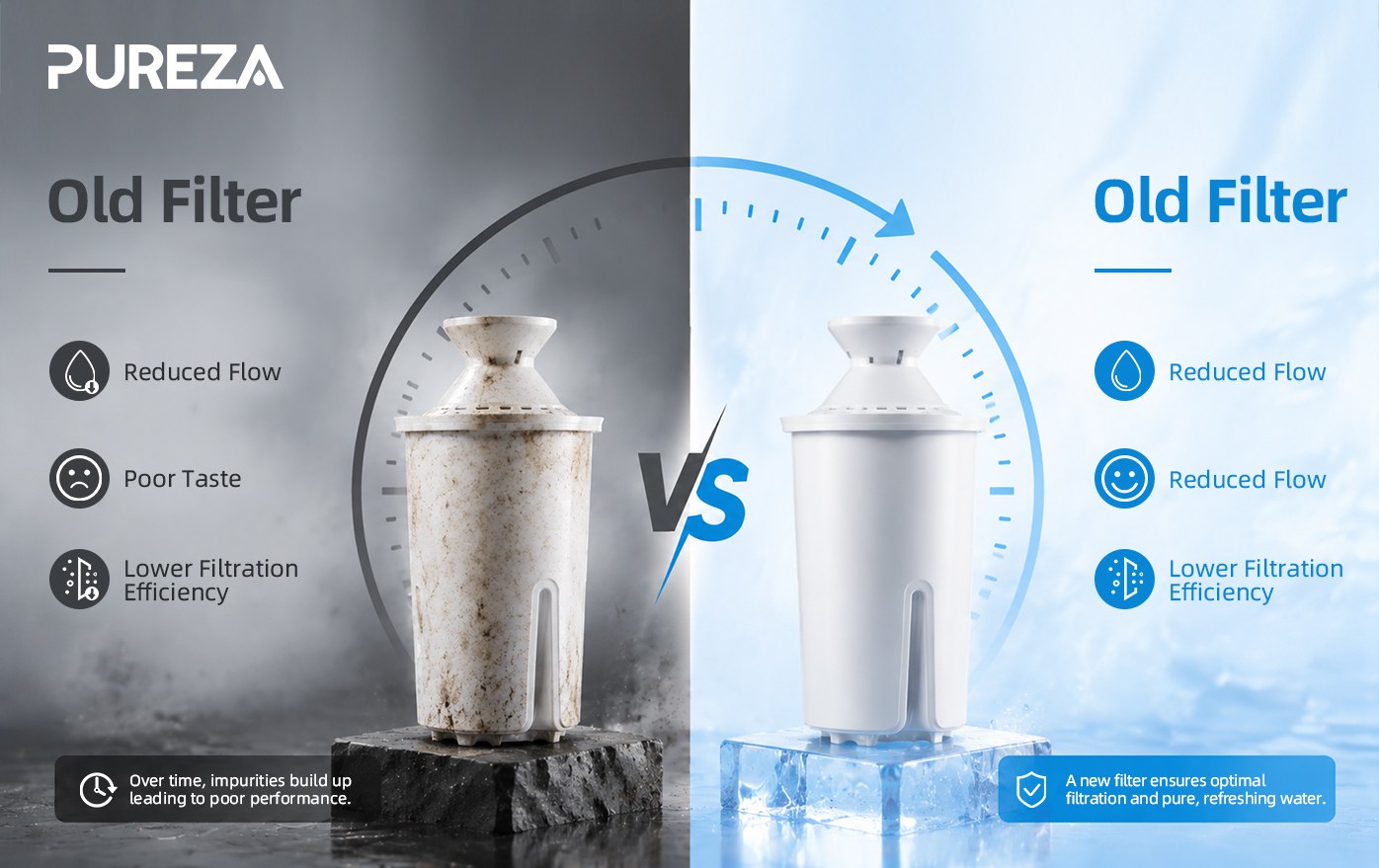
    When it comes to water filtration systems, many people focus on the appliance itself while paying less attention to the replacement water filter. In reality, the filter cartridge is the heart of the filtration system. It is responsible for removing unwanted substances, improving taste, and maintaining consistent water flow throughout its service life.


    Although many replacement filters appear similar on the outside, their internal materials, manufacturing processes, and quality control standards can vary significantly. These differences not only influence the quality of drinking water but can also affect the performance and longevity of the appliance.


    Whether you are a distributor, brand owner, or OEM buyer, understanding what makes a high-quality replacement water filter is essential for delivering reliable products to your customers.


    Why Replacement Water Filters Matter


    A replacement water filter does much more than simply fit inside an appliance. It plays a critical role in maintaining the overall performance of the entire filtration system.


    A well-designed replacement filter helps:


    - Improve the taste and odor of drinking water


    - Reduce chlorine and other common impurities according to its design


    - Maintain a stable and consistent water flow


    - Support the normal operation of the appliance


    - Deliver reliable filtration performance throughout the recommended service life


    If a replacement filter is poorly manufactured or inconsistent in quality, even a high-quality appliance may not perform as intended.


    How Replacement Water Filters Affect Water Quality


    Filtration Media Make the Difference


    The performance of a water filter begins with its filtration media. Activated carbon, ion exchange resin, sediment filtration materials, and other components each play an important role in the filtration process.


    The quality of these materials directly influences filtration efficiency, water taste, flow characteristics, and overall service life. Consistent manufacturing and proper material selection help ensure that every filter performs as expected.


    Consistent Manufacturing Ensures Consistent Performance


    Performance should not vary from one cartridge to another. Precision manufacturing, controlled production processes, and strict quality inspections help ensure product consistency across every production batch.


    Reliable replacement filters are designed to provide stable water flow, dependable filtration performance, and predictable replacement intervals, giving end users greater confidence in the products they purchase.


    How Replacement Water Filters Affect Appliance Performance


    The influence of a replacement filter extends beyond water quality. It also affects how the appliance operates over time.


    Proper Compatibility and Sealing


    A replacement filter should fit precisely within the designated filtration system. Proper dimensions and sealing help prevent water bypass, leakage, and unstable installation. A well-engineered filter works as an integrated part of the appliance rather than simply serving as a compatible component.


    Stable Water Flow


    Flow resistance is an important design consideration. A properly manufactured filter helps maintain the designed flow rate while supporting a smooth user experience. Inconsistent manufacturing or improper internal structures may result in unstable flow performance, affecting the overall operation of the filtration system.


    Reliable Structural Quality


    Housing strength, welding quality, sealing performance, and dimensional accuracy all contribute to the durability of a replacement filter. High manufacturing standards help reduce the likelihood of leaks and improve long-term reliability.


    What Makes a Reliable Replacement Water Filter Manufacturer?


    For businesses sourcing replacement filters, selecting the right manufacturing partner is just as important as selecting the right product.


    Several factors distinguish an experienced manufacturer from a standard supplier.


    Extensive Manufacturing Experience


    Manufacturers with years of industry experience have typically developed mature production processes, established quality management systems, and accumulated valuable expertise in product development.


    This experience helps ensure product consistency and supports long-term customer partnerships.


    Comprehensive Testing Capabilities


    Product quality should be verified through rigorous testing rather than assumptions.


    Manufacturers with in-house laboratories are able to evaluate filtration performance, structural integrity, flow characteristics, and product consistency before products leave the factory.


    Testing capability also enables faster product development, more efficient quality control, and continuous product improvement.


    Broad Product Compatibility


    The replacement water filter market covers a wide range of applications. An experienced manufacturer should be capable of supplying replacement filters for multiple product categories, including: 


    · Refrigerator water filter cartridges


    · Coffee machine water filter cartridges


    · Pitcher water filter cartridges


    · Under-sink water filters


    · Countertop water filtration systems


    Many manufacturers also develop replacement solutions designed to be compatible with widely used filtration platforms found in leading household appliances, allowing brand owners and distributors to serve diverse market demands with confidence.


    Why Manufacturing Strength Matters


    Behind every reliable replacement water filter is a well-controlled manufacturing system.


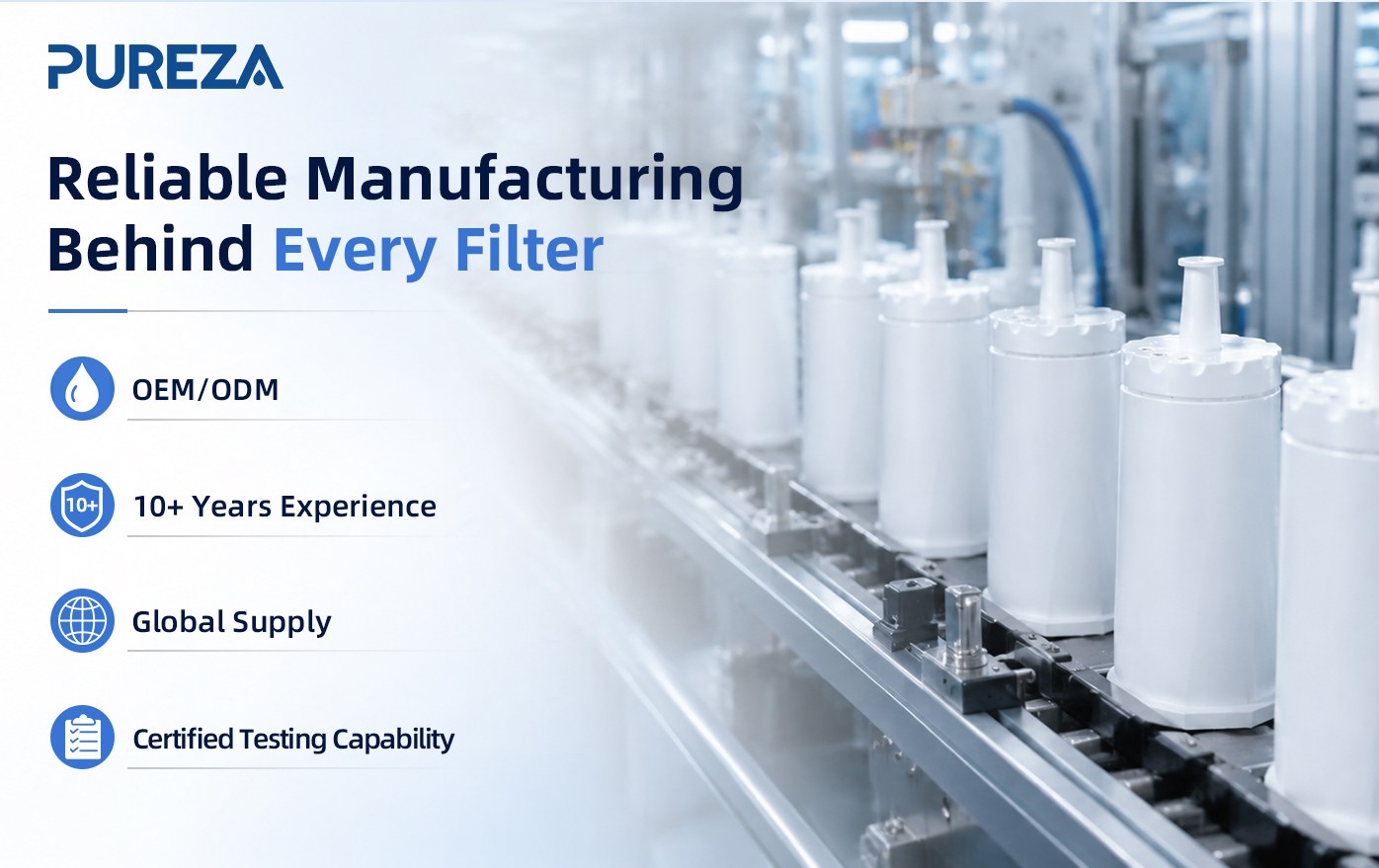
    From raw material selection to carbon block production, injection molding, assembly, testing, packaging, and shipment, every stage contributes to the final product quality.


    At Pureza, replacement water filters have been our core business for more than 10 years. As an integrated manufacturer with both production and international trade capabilities, we provide comprehensive OEM and ODM solutions for customers worldwide.


    Our manufacturing capabilities include 19 carbon block production lines, four automated production lines, more than 100 industrial machines, and a daily production capacity exceeding 50,000 filter cartridges.


    To further strengthen product quality, we have established a laboratory with advanced testing capabilities recognized by CSA, enabling comprehensive product evaluation and quality verification throughout the development and production process.


    Many of our replacement filter solutions are designed with the capability to meet the performance requirements commonly associated with NSF/ANSI 42, NSF/ANSI 53, and NSF/ANSI 372, depending on the specific product design and certification requirements.


    By combining manufacturing expertise, engineering capabilities, quality testing, and flexible OEM/ODM services, we help customers develop reliable replacement water filtration products that meet the expectations of different markets.


    Looking Beyond Better Water


    Replacement water filters are far more than consumable accessories. They directly influence drinking water quality, appliance performance, and the overall user experience.


    For distributors, retailers, and private-label brands, choosing an experienced manufacturing partner means choosing consistent quality, dependable production, and long-term reliability.


    As global demand for replacement water filtration products continues to grow, water filter manufacturers with integrated production capabilities, advanced testing facilities, and broad product portfolios are well positioned to support customers with high-quality filtration solutions for a wide variety of applications.

  • How Do Stainless Steel Gravity Water Filters Compare to Plastic Models for Durability?

    Why Are More Users Reconsidering Water Filter Materials?


    In recent years, gravity-fed water filtration systems have become increasingly popular for homes, offices, camping, and emergency preparedness applications. Compared with complicated reverse osmosis systems, gravity water filters require no electricity, are easier to install, and can operate reliably in a wide range of environments.


    As consumers gain more experience with water filtration systems, many are beginning to realize that long-term performance depends on more than just the filter cartridge itself. The housing material also plays a major role in overall durability and user experience.


    Today, most gravity water filtration systems on the market fall into two categories: plastic models and stainless steel models. While both can provide basic filtration functions, there are significant differences in structural strength, long-term reliability, and overall product lifespan.


    For long-term users, a gravity water filter is no longer viewed as a short-term appliance, but rather as an everyday system expected to perform consistently for years. That shift in expectations is driving more consumers to focus not only on filtration performance, but also on durability.


    The Limitations of Plastic Gravity Water Filters Over Time


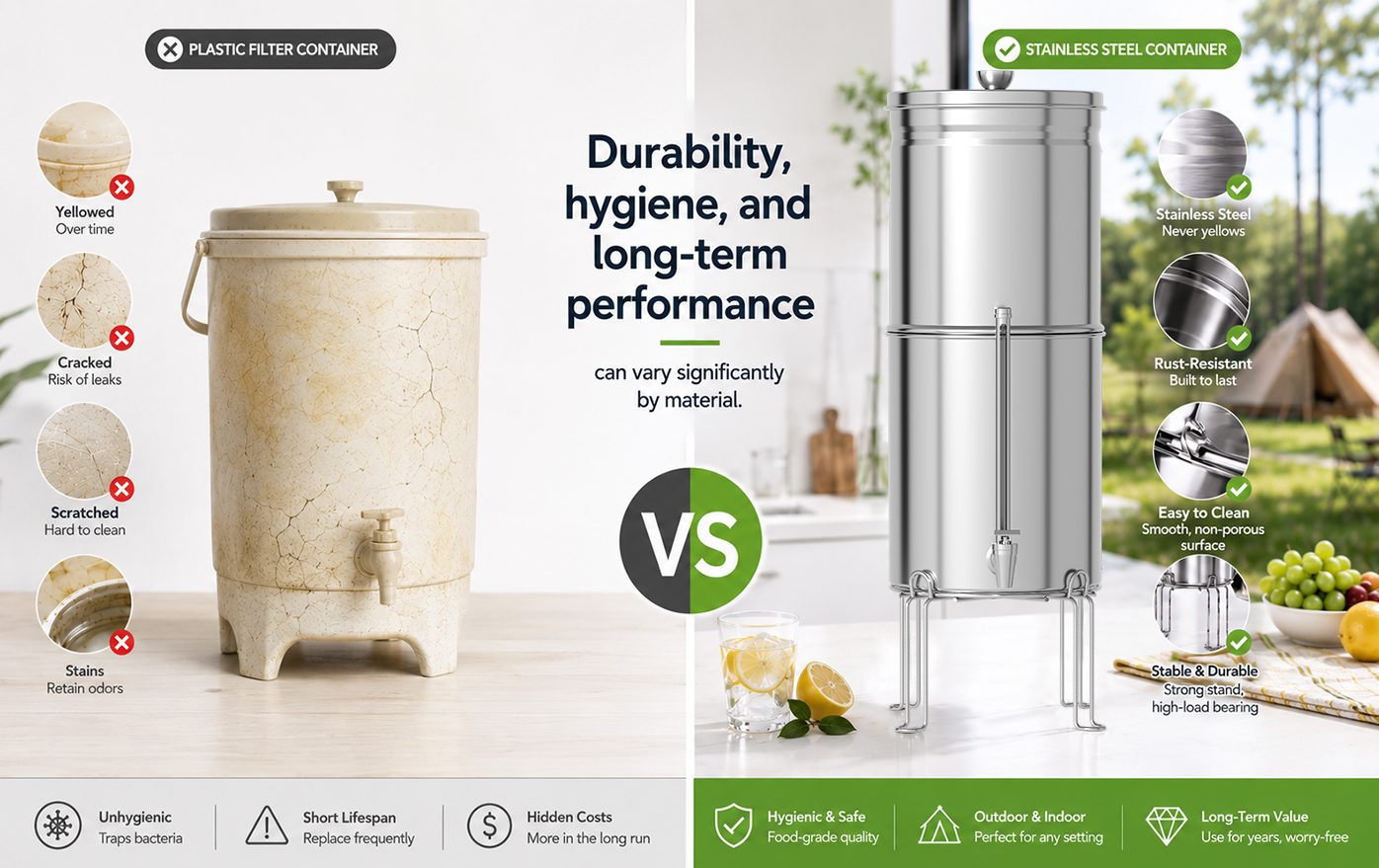
    Plastic gravity water filters are widely used because they are lightweight and generally more affordable upfront. However, as usage time increases, durability limitations often become more noticeable.


    One major issue is that plastic materials are more vulnerable to temperature fluctuations and UV exposure. Over time, some plastic housings may begin to yellow, age, or become brittle, especially in outdoor or high-temperature environments.


    In addition, plastic structures typically offer limited impact resistance. During transport, movement, or everyday handling, plastic housings are more susceptible to cracking or deformation if accidentally dropped or bumped. Once connection points become damaged, sealing performance and long-term reliability may also decline.


    Long-term water storage users are also paying closer attention to maintenance and cleanliness. Some plastic materials are more likely to develop visible scratches, water stains, or lingering odors after prolonged use.


    While plastic systems can certainly meet basic filtration needs, they may face limitations in long-term durability and structural stability under high-frequency usage conditions.


    Why Are Stainless Steel Gravity Water Systems Better Suited for Long-Term Use?


    Compared with plastic materials, stainless steel gravity filtration systems offer several clear advantages in long-term durability.


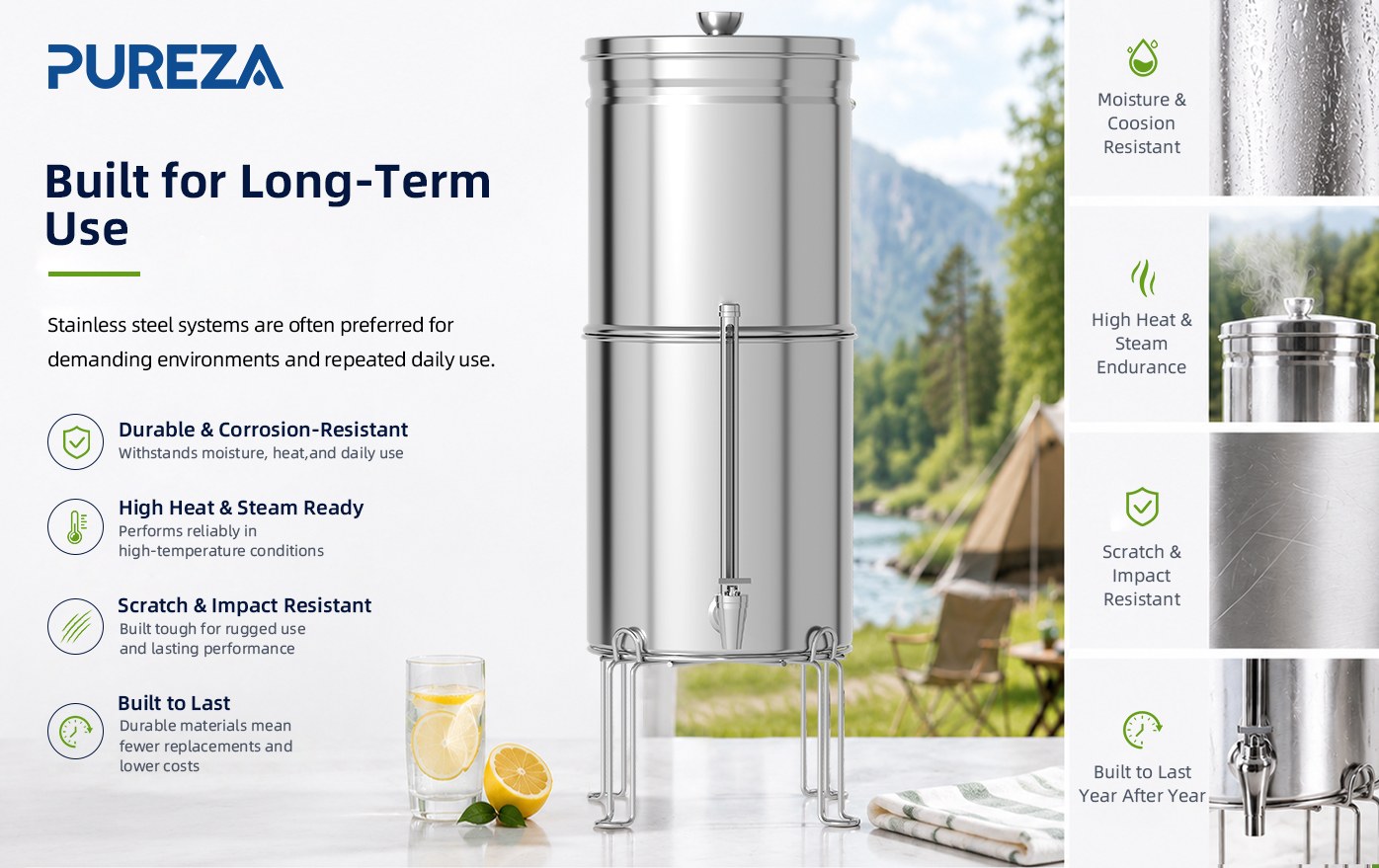
    First, stainless steel provides significantly greater structural strength. Whether during transportation, long-term water storage, or outdoor use, stainless steel housings are far more resistant to cracking, deformation, and physical damage.


    Second, stainless steel offers superior corrosion resistance. In environments involving constant moisture exposure, high-quality stainless steel maintains its structural integrity much more effectively over time. This is especially important for users who rely on long-term water storage.


    Maintenance is another major advantage. Compared with plastic surfaces that may scratch or discolor more easily, stainless steel housings are generally easier to clean and maintain, making them more suitable for high-frequency everyday use.


    Beyond performance, many overseas consumers are also placing greater emphasis on overall product aesthetics and lifestyle compatibility. Stainless steel gravity systems often provide a cleaner, more premium, and more professional appearance that fits naturally into modern kitchens, offices, and outdoor environments.


    S001 Stainless Steel Gravity Water Filter System: Built for Both Performance and Durability


    Designed for long-term reliability, the S001 stainless steel gravity water filtration system focuses not only on filtration performance, but also on structural quality and long-lasting usability.


    The S001 is available in both 2.25-gallon and 2.9-gallon capacities, allowing users to choose the configuration that best fits their household, office, or outdoor needs. Larger water storage capacity means fewer refills and greater convenience for multi-user environments.


    For filtration, the system supports both Silver-loaded Activated Carbon Rod Filter Cartridges and Fluoride Removal Water Filter Cartridges. Built to meet NSF42, NSF53, and NSF401 standards, the system is designed to effectively reduce contaminants including PFOA, PFOS, VOCs, and other potentially harmful substances.


    For consumers increasingly focused on water safety, this means not only improved taste, but also more comprehensive filtration performance.


    Structurally, the S001 uses high-quality stainless steel craftsmanship with a separately manufactured base and housing design. This creates a smoother overall appearance while improving structural stability and storage convenience. Compared with traditional integrated structures, the system offers greater flexibility during transport, installation, and everyday use.


    The S001 also includes user-friendly accessories such as a sight glass spigot, priming washer, and dedicated installation wrench, helping simplify setup and maintenance. Since the system operates entirely without electricity, it remains highly suitable for home use, camping, outdoor applications, and emergency preparedness situations.


    Durability Is Becoming a New Priority for Consumers


    As consumers place greater importance on long-term ownership experience, the criteria for choosing gravity water filtration systems are evolving. Today, users care not only about whether a system can filter water, but also how reliably it can perform over time.


    Compared with plastic models, stainless steel gravity water systems continue to demonstrate clear advantages in structural strength, durability, maintenance, and overall user experience.


    For users seeking long-term reliability, frequent daily use, or greater confidence in product lifespan, stainless steel systems are becoming an increasingly preferred option.


    Combining premium stainless steel construction, professional-grade filtration capability, and electricity-free operation, the S001 stainless steel gravity water filter system is designed not simply as a water filter, but as a dependable long-term solution for modern water purification needs.